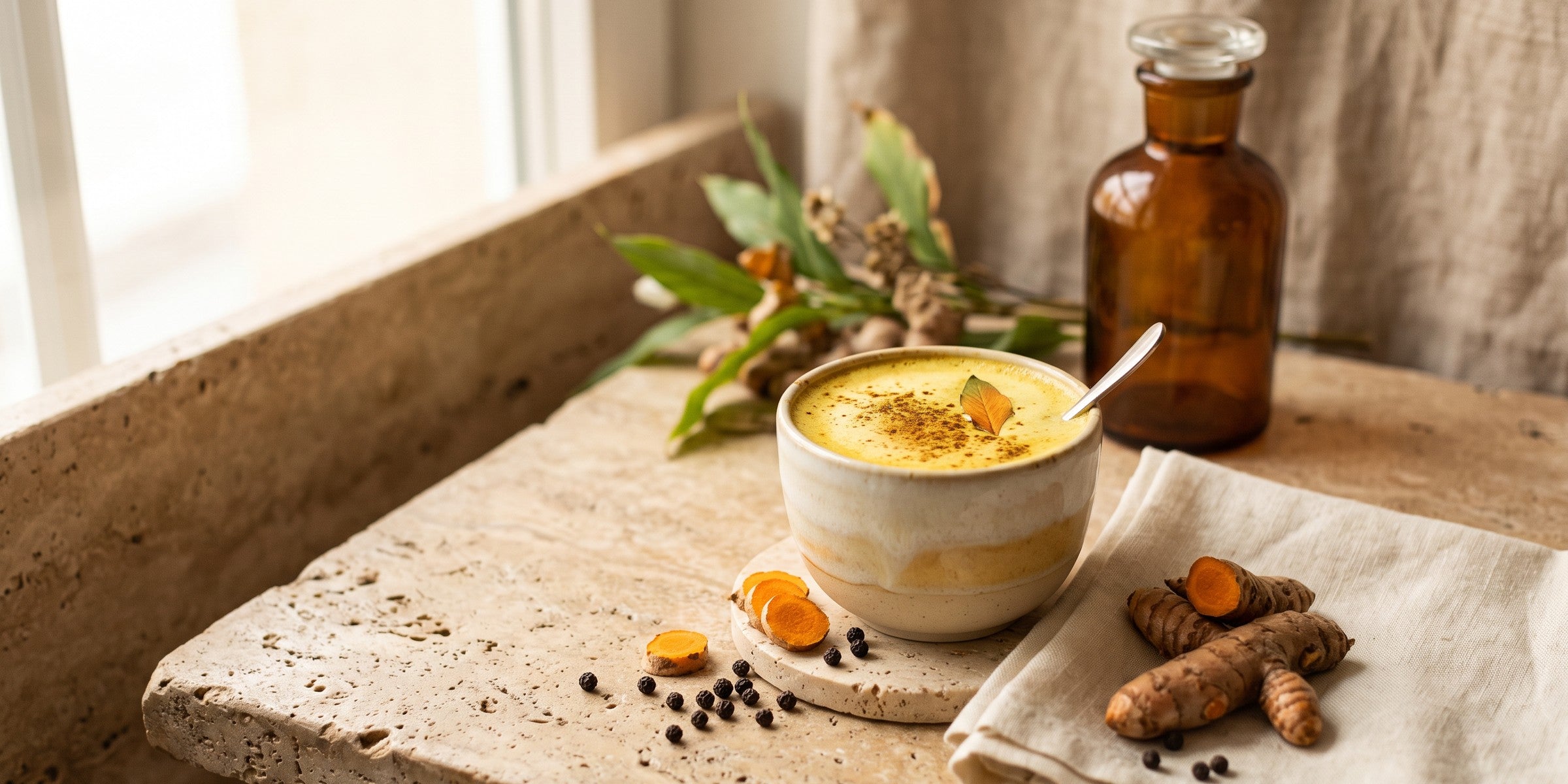
Why Eating Plain Turmeric Does Almost Nothing: The Bioavailability Problem Behind the Trend
Eating plain turmeric does very little for your skin because curcumin, its active compound, is poorly absorbed by the body when swallowed on its own. Only a small fraction reaches your system without fat or black pepper to carry it, so that absorption gap, not the spice itself, is the real story. The golden latte, the daily supplement, the spoonful stirred into warm milk with the quiet confidence that it is doing something good: it has become one of the most trusted wellness rituals of the last decade, passed along as settled fact. And it rests on an assumption almost nobody checks, that swallowing turmeric means your body actually receives it.
That assumption is where the trend quietly falls apart. The science on this point is clear and a little inconvenient, because the compound everyone is after is one your body is remarkably bad at absorbing on its own. Understanding why is worth more than a dozen lattes, and it reveals something useful about how botanicals work in general, on the inside and on the skin.
Is the golden spoonful actually delivering what we assume?
The cultural momentum behind turmeric is enormous, and most of it skips a step. We assume that because turmeric is potent in a lab and revered in tradition, eating it plainly delivers that potency to the body. But potency and delivery are two different things. A compound can be genuinely active and still be nearly useless taken the wrong way, because activity means nothing if it never reaches your system in a usable form. That gap between what a compound can do and what your body can absorb is the whole story here.
Turmeric's reputation rests on potency, but potency and delivery are two different things. A compound can be genuinely active and still do almost nothing if it never reaches your system in a usable form.
Why is curcumin so hard for the body to absorb?
The concept that explains it is bioavailability (how much of a compound your body actually absorbs and can put to use, rather than how much you consume). On this measure, the active in turmeric performs poorly. Curcumin (turmeric's principal active compound) is poorly absorbed in the gut, rapidly processed by the liver, and largely excreted before it can accumulate to meaningful levels. Eaten as a plain spoonful or a basic capsule, most of it simply passes through. The dose on the label and the dose your body receives are very different numbers.
This is not a knock on turmeric itself. The compound is real and well studied. The problem is purely one of getting it in, and that problem has known solutions.
Curcumin, turmeric's principal active compound, is poorly absorbed in the gut, rapidly processed by the liver, and largely excreted before it reaches meaningful levels. Eaten as a plain spoonful, most of it simply passes through.
What actually improves curcumin absorption?
Curcumin absorbs far better in the company of certain partners. Fat helps, because curcumin is fat-soluble and rides into the system more readily alongside it. Piperine (a compound in black pepper) markedly increases curcumin absorption by slowing how quickly the body clears it. And modern formulated delivery systems are built specifically to raise bioavailability beyond what raw turmeric can manage. Here is the quietly clever part of the tradition: the classic preparations that simmered turmeric with fat and a little black pepper were, without the vocabulary of pharmacology, solving the absorption problem. The lone supplement capsule, stripped of those partners, often is not.
Did the old folk remedies get something right that formulation now makes reliable?
So the old ways were onto something real, and they deserve credit rather than mockery. Pairing turmeric with ghee and pepper was an intuitive answer to a problem science would only later name. What modern formulation adds is reliability: instead of hoping a home preparation hit the right combination, a properly designed delivery system makes absorption consistent and measurable. The instinct of the tradition was sound. The execution is simply made dependable. Honoring the remedy and explaining the science are not in conflict, they are the same act of taking the tradition seriously.
Pairing turmeric with ghee and black pepper was an intuitive answer to a problem science would only later name. What modern formulation adds is reliability, making absorption consistent rather than left to chance.
Why does this matter for skincare too?
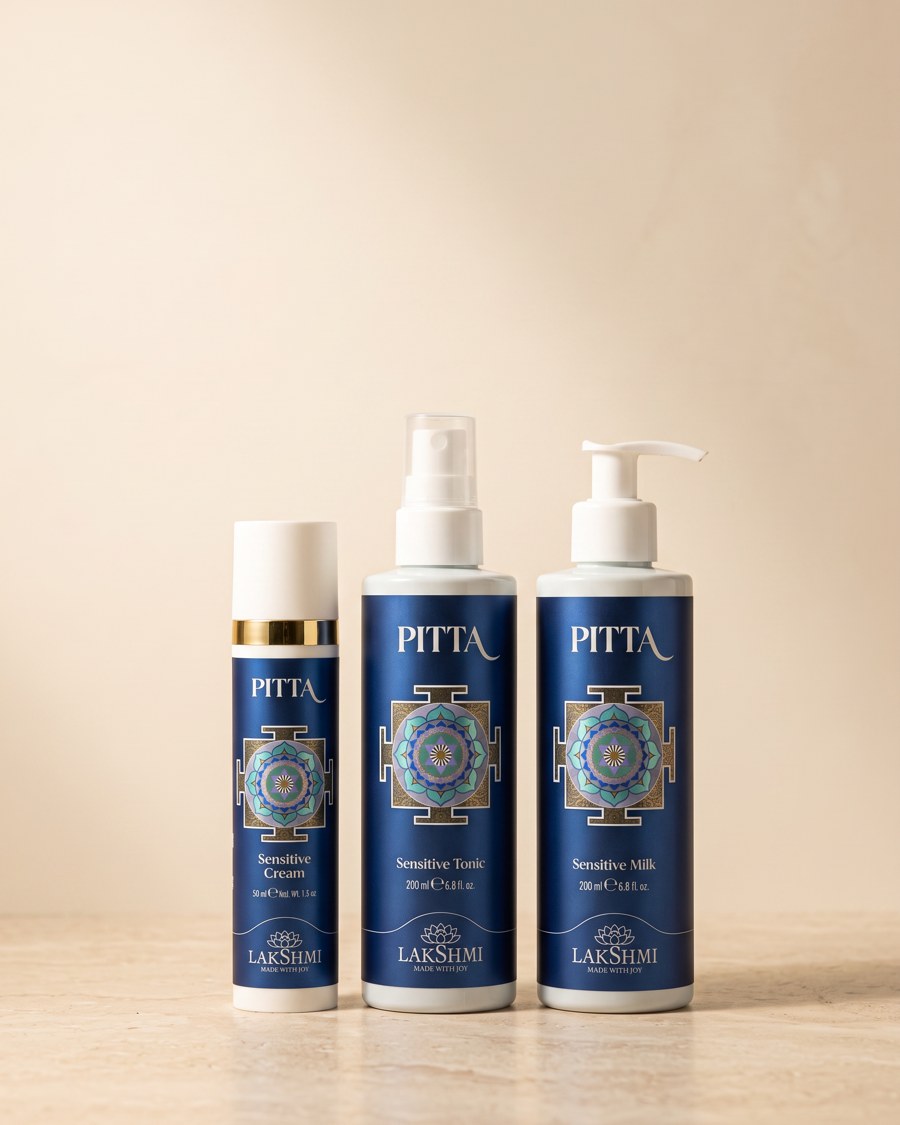
The bioavailability lesson does not stop at what you swallow. The same principle governs what you put on your skin. A botanical ingredient only does something if it is delivered in a form the skin can actually use, at a concentration that matters, in a base that keeps it stable. An impressive name on a label means little if the formulation cannot deliver it. Delivery, not the mere presence of a celebrated botanical, is what separates a real effect from a marketing claim. It is why Lakshmi's Ayurvedic-inspired approach builds botanicals into carefully designed bases, such as the Kapha Pure Light Cream and Kapha Perfection Tonic made for oily, blemish-prone skin, rather than leaning on a famous name alone. We explore that distinction in our piece on telling the herb from the oil it's dissolved in.
Delivery, not the mere presence of a celebrated botanical, is what separates a visible result from a marketing claim. On the skin as in the gut, a formulation only matters if it can actually carry its ingredients where they need to go.
What is a more honest way to think about turmeric?
None of this is medical or nutritional advice, and it is not a reason to pour out your golden latte if you enjoy it. It is a reason to hold a more accurate picture of what that spoonful is and is not doing, and to be skeptical of any product, swallowed or applied, that leans on a famous botanical without addressing how the active actually gets delivered. The romance of an ancient ingredient is worth something. Delivery is worth more.
A more honest view of turmeric keeps the romance of an ancient ingredient while respecting the chemistry: absorption has rules that enthusiasm cannot override, so be skeptical of any product, swallowed or applied, that leans on a famous botanical without addressing delivery.
Turmeric earns its reputation through chemistry, not folklore, and chemistry has rules about absorption that no amount of enthusiasm overrides. When you are ready, you can discover why formulation, not folklore, is where botanicals earn their results.
When you are ready, explore the KAPHA Radiance Ritual.
Related reading: Does turmeric visibly even skin tone? · Is it the herb, or the oil it's dissolved in? · Where botanicals shine
About the author
Franco Canteri is the co-founder of Lakshmi and the author of Lakshmi Ayurveda. In 1988 he and Linda Canteri traveled to India for one of the first Ayurveda courses of their generation, and in 1989 they founded Lakshmi on the hills of Verona. A yoga and meditation instructor, Franco has guided the brand's Ayurvedic-inspired formulation practice for more than thirty-five years. This article reflects that founding philosophy.
This article is for educational purposes and does not constitute medical or nutritional advice.