The Heavy-Metal Question: Why the Real Risk Is in Pills You Swallow, Not the Oil on Your Face
Topical Ayurvedic skincare carries a very different heavy-metal risk than the headlines suggest. The documented contamination in the research sits in ingested Ayurvedic mineral preparations you swallow, not in the plant-based oils and creams you smooth onto your skin. A botanical facial oil is a cosmetic, not a mineral medicine, and that distinction is the whole answer to the question.
You read the headline once and it never quite left you: a study found lead in Ayurvedic products, a wellness influencer mentioned mercury, and a friend who swore by an herbal regimen quietly stopped, telling you only that she no longer trusted what was in it. So now you stand in front of a beautiful jar of Ayurvedic skincare, drawn to the tradition behind it, and a small voice asks the question almost no brand will answer honestly: could this harm me?
It is a fair question, and it deserves a precise answer rather than reassurance. The honest version is this: there is a documented, real heavy-metal risk inside the broad world of Ayurveda, but it does not live where you might assume. It lives in what you swallow, not in what you smooth onto your skin. Once you understand why, you can shop this category the way you shop everything else you value, with clear eyes and good questions.
What Did the Research Actually Find?
The concern traces back to credible science, which is exactly why it carries weight. A 2008 study published in the Journal of the American Medical Association tested Ayurvedic products sold online and found that roughly one in five contained detectable lead, mercury, or arsenic. The Centers for Disease Control and Prevention has published case reports of lead poisoning linked to Ayurvedic remedies. The U.S. Food and Drug Administration notes plainly that it has not approved any Ayurvedic products and does not evaluate them for safety before sale.
A 2008 study in the Journal of the American Medical Association found that roughly one in five Ayurvedic products bought online contained detectable lead, mercury, or arsenic, and that contamination clustered in preparations made to be swallowed rather than in topical skincare.
Read quickly, that sounds like an indictment of an entire tradition. Read carefully, it points at one specific corner of it. The products implicated in these findings share a defining trait: they were made to be ingested.
What Is Rasa Shastra, and Why Does It Carry the Risk?
To understand the risk, you have to understand a branch of Ayurveda called rasa shastra (literally "the science of mercury," an alchemical tradition that deliberately processes metals and minerals into oral medicines). Within it, practitioners create preparations known as bhasma (calcined mineral or metal ash, taken internally in tiny doses). In classical practice these substances are put through elaborate purification steps intended to transform them. The intention is sincere and centuries old.
Rasa shastra is the branch of Ayurveda that deliberately processes metals and minerals into oral preparations called bhasma, taken internally in tiny doses. This ingested mineral tradition, not botanical skincare, is where the heavy-metal case reports concentrate.
The problem is one of verification and manufacturing control in a modern, unregulated marketplace. When a mineral preparation is meant to be eaten, any contamination or incomplete processing goes directly into the body and accumulates, which is the mechanism behind the case reports. The heavy-metal signal in the research clusters almost entirely around these ingested mineral medicines, not around the botanical oils, creams, and cleansers that make up topical skincare.
How Is Ingested Ayurveda Different From Topical Skincare?
This is the line worth drawing in permanent ink. A bhasma tablet designed to be swallowed and a plant-based facial oil designed to sit on the surface of your skin are not the same category of product, and they do not carry the same category of risk. One is mineral medicine taken into the bloodstream. The other is a botanical formulation working at the surface.
A bhasma tablet meant to be swallowed and a plant-based facial oil meant to rest on the skin are different categories of product carrying different categories of risk. One is mineral medicine taken internally; the other is a botanical cosmetic working at the surface.
Topical Ayurvedic skincare, at its best, is built from plants: sesame and almond oils, turmeric, saffron, rose, sandalwood, herbal infusions. These are cosmetic ingredients that support the appearance and comfort of skin. They are a world away from calcined metals taken by mouth. When a brand blurs that line, whether through carelessness or marketing, it does the reader a disservice. When a brand respects it, that respect is the first thing worth looking for.
A necessary note: lead, mercury, and arsenic exposure are genuine medical matters. If you have taken ingested Ayurvedic mineral preparations and have any concern about exposure, speak with your physician, who can order the appropriate testing. No article, and no product, replaces that conversation.
How Can You Verify Purity Before You Trust a Label?
Skepticism is not the enemy of beautiful skincare; it is how you find the products that earn your trust. Here is what to look for before you bring any Ayurvedic product into your routine.
Ask whether the botanicals are certified organic by a recognized body, which sets a standard for how ingredients are grown and handled. Look for transparent, named sourcing rather than a vague "herbal blend," because a brand that can tell you where a plant was grown is a brand that knows its supply chain. Favor production you can trace, where each batch stands behind a real person rather than an anonymous factory run. Read the full ingredient list and notice whether it reads like food and plants or like something you cannot place. And reserve a different, higher level of caution for anything sold to be ingested, which is the category where the real questions begin.
Before trusting any Ayurvedic label, look for certified-organic botanicals, named and traceable sourcing, a readable plant-based ingredient list, and extra caution for anything sold to be ingested. Those questions separate authentic formulation from marketing.
These same questions are worth applying across the whole field, and they are the spine of how a discerning shopper separates authentic formulation from marketing. (For a fuller buyer's framework, see our guide on how to choose safe Ayurvedic skincare.)
How Does Lakshmi Think About Purity?
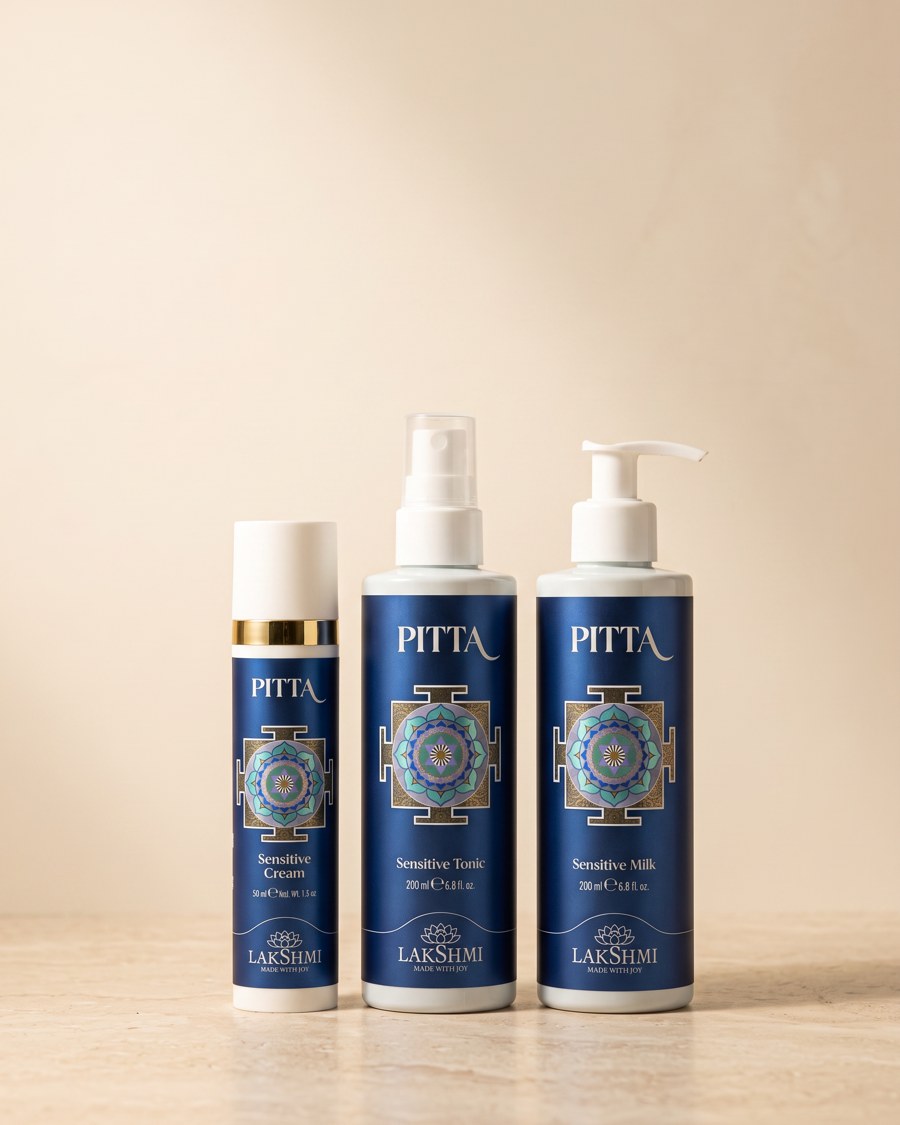
This is the standard Lakshmi was built to meet, because it is the standard its founders hold for themselves. Lakshmi began in 1989 in the hills of Verona, founded by Franco and Linda Canteri, and its formulations are produced in its own laboratory, La Verde Vita, part of Lakshmi Holding. The products are certified, SKU by SKU, to the AIAB Bio Eco Cosmesi standard (an Italian standard for natural and organic cosmetics), chosen for a topical tradition of plant-based skincare rather than the ingested mineral practices that sit at the center of the heavy-metal research.
Lakshmi, founded in 1989 near Verona by Franco and Linda Canteri, makes topical, plant-based skincare in its own laboratory, La Verde Vita, part of Lakshmi Holding. Its products are certified, SKU by SKU, to the AIAB Bio Eco Cosmesi standard, kept to the topical tradition rather than ingested mineral practices.
That distinction is not a detail. It is the whole point. Lakshmi's work lives on the surface of the skin, in oils and creams formulated to improve the appearance of skin and support the look of its natural resilience. The provenance is traceable, the ingredients are named, and the philosophy is the opposite of the anonymous, unverifiable supply chains that produced the headlines you remember.
How Should You Read Those Headlines Now?
So return to that jar, and to the small voice that asked whether it could harm you. The honest answer is that the question was pointed at the wrong shelf. The risk that earned those headlines belongs to ingested mineral preparations made in unregulated conditions. An AIAB-certified, named-source botanical formula applied to your skin is a different proposition entirely, and you now have the questions to confirm it for yourself.
The heavy-metal headlines belong to ingested Ayurvedic mineral preparations made in unregulated conditions. An AIAB-certified, named-source botanical formula applied to your skin is a different proposition, and you now have the questions to confirm it for yourself.
The reflex to verify before you trust is not something to apologize for. It is exactly the instinct that leads you to the brands worth keeping. When you are ready, you can discover how Lakshmi sources and verifies its botanicals, and judge the answers against the standard you have just set.
When you are ready, explore the VATA Comfort Ritual.
Related reading: how to choose safe Ayurvedic skincare · real Ayurveda vs. "Ayurvedic washing" · Ayurvedic herbs and drug interactions: what to ask
About the author
Franco Canteri is the co-founder of Lakshmi and the author of Lakshmi Ayurveda. In 1988 he and Linda Canteri traveled to India for one of the first Ayurveda courses of their generation, and in 1989 they founded Lakshmi on the hills of Verona. A yoga and meditation instructor, Franco has guided the brand's Ayurvedic-inspired formulation practice for more than thirty-five years. This article reflects that founding philosophy.
This article is for educational purposes and does not constitute medical advice. Heavy-metal exposure is a medical matter; consult your physician with any specific health concerns.