Does Turmeric Visibly Even Skin Tone? How to Use It Without Turning Orange
To use turmeric for skin tone, reach for a properly formulated product rather than a raw kitchen paste. A good formulation delivers curcumin, the active in turmeric, at a sensible concentration in a base built to avoid staining, and applying it in the evening lets any faint tint wash away by morning. The tone benefit is about the look of your skin, not a medical result.
Somewhere there is a sink with a faint yellow tint that never quite came clean, and a woman who tried the turmeric face mask everyone swears by. The promise was a brighter, more even complexion. The reality, at least at first, was orange-stained fingertips and a hairline that took two washes to recover. If that is you, you are not alone, and you have probably wondered whether the staining was the price of something real or just the price of a mess.
The answer is encouraging on both counts. Turmeric does have a genuine story to tell about skin, and the orange staining is solvable rather than inevitable. Understanding what the spice actually does, and why the kitchen version stains while a well-made formulation does not, is the difference between a frustrating DIY experiment and a botanical that earns its place.
Why Does the Kitchen Turmeric Remedy Stain Everything?
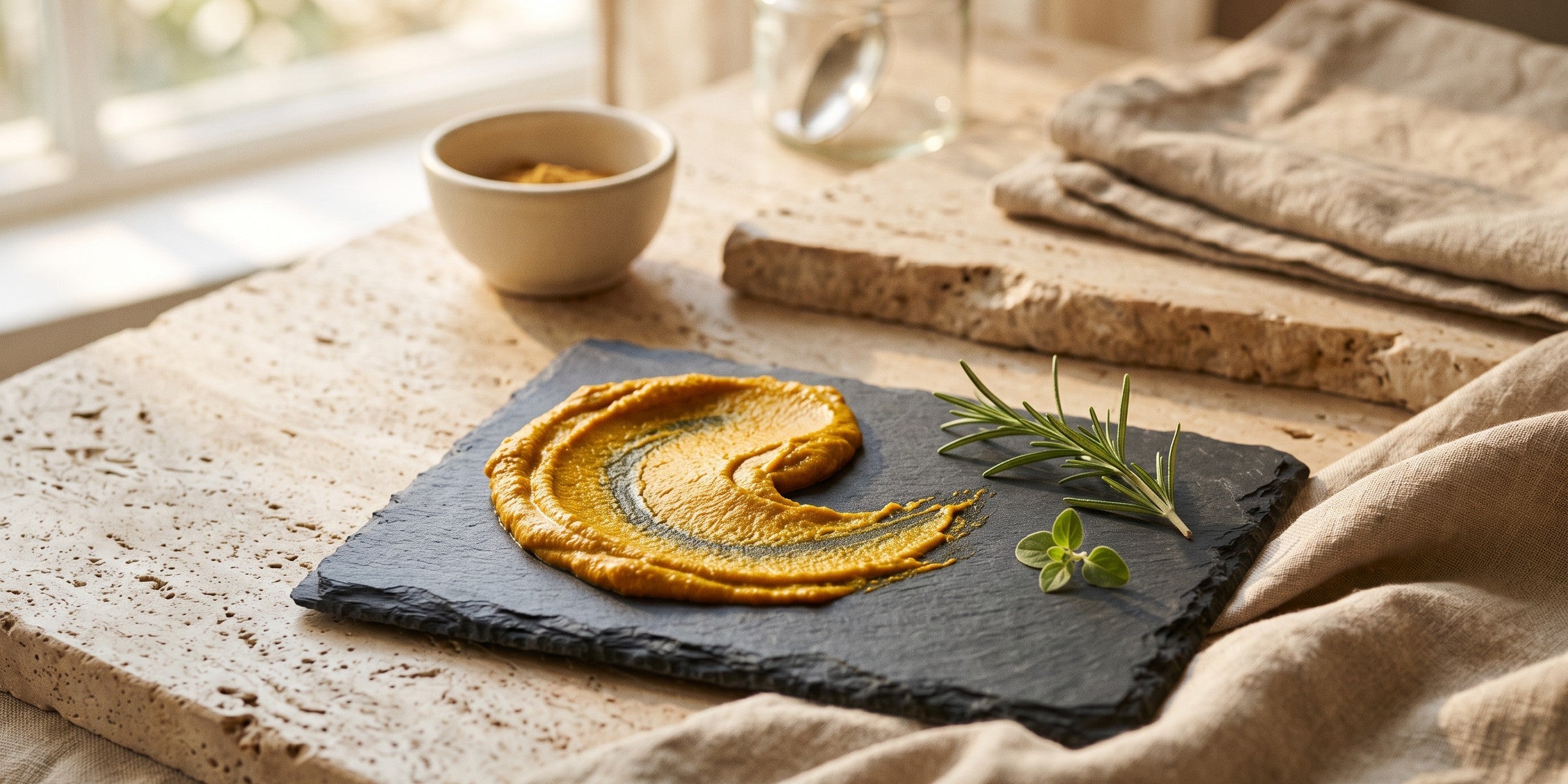
Raw turmeric is a vivid natural dye before it is anything else, so a kitchen paste stains skin, nails, and sinks on contact. That staining is a delivery problem, not proof that turmeric is useless for the look of skin.
The DIY turmeric paste is a rite of passage, and it is also where most of the disappointment comes from. Raw turmeric is a powerful pigment before it is anything else, so the first thing it does is stain whatever it touches. That experience leads many people to conclude either that turmeric is pure folklore or that the staining is unavoidable. Neither is quite right, and to see why, it helps to separate what turmeric does from how it is delivered.
What Does Curcumin Actually Do for Skin?
Curcumin is the principal compound in turmeric and a well-studied antioxidant with a long, soothing reputation. For the look of brighter, more even skin, though, the topical human evidence is still limited and early-stage, so curcumin is best seen as a supporting ingredient rather than a proven fix.
The active worth caring about is curcumin, the principal compound in turmeric, responsible for both its color and most of its studied effects. On the mechanism, the research base is genuinely substantial: curcumin is a well-studied antioxidant with a long-documented soothing, calming reputation in the literature. When it comes to topical benefits for the appearance of tone and evenness specifically, the human evidence is more limited and earlier-stage, suggesting a supportive role for the look of brighter, more even skin rather than a proven correction.
So the fair summary is that curcumin has a solid mechanistic story and some promising but modest topical data for appearance. It is a worthwhile supporting ingredient, not a magic eraser, and saying so plainly is what keeps expectations where they belong.
Why Does Turmeric Turn You Orange, and How Do You Stop It?
Turmeric turns skin orange because curcumin is a pigment. A well-formulated product delivers curcumin at a sensible concentration in a base built to avoid surface staining, and applying it in the evening lets any faint tint wash away by morning.
The staining traces directly to curcumin's pigment, the same property that makes turmeric such a vivid dye. Raw paste leaves that pigment sitting on the skin with nothing to control it. The fixes are straightforward. Use turmeric in a properly formulated product, where the curcumin is delivered at a sensible concentration in a base designed to avoid surface staining, rather than as raw powder. Favor wash-off or refined-delivery forms over a paste left to dry on skin. And apply it in the evening, so any faint residual tint settles overnight and washes away by morning.
Raw Paste vs. Formulated Turmeric
This is the heart of it. A raw kitchen paste gives you maximum stain and minimum control, with results that vary wildly from one attempt to the next. A refined formulation delivers the benefit of curcumin in a stable, usable form, at a concentration chosen on purpose, without turning your bathroom into a dye works. The herb is the same. The experience and the consistency are not, and the difference is entirely in the formulation.
What Is a Realistic Expectation for Turmeric and Skin Tone?
A good turmeric formulation can support the appearance of brighter, more even-looking skin over time, but it will not fade or correct a pigmentation condition. Melasma and persistent hyperpigmentation are matters for a dermatologist, and daily sun protection does more for the look of evenness than any botanical.
Set your hopes where the evidence sets them. A good turmeric formulation can support the appearance of brighter, more even-looking skin over time. What it will not do is fade or correct a pigmentation condition, and anyone promising that is reaching past the science. Melasma and persistent hyperpigmentation are matters for a dermatologist, who has evidence-backed options a botanical cannot replicate. Turmeric can play a supporting role in how even your skin looks. It is not a treatment for a condition. And because sun exposure is the largest driver of uneven tone, daily sun protection does more for the look of evenness than any botanical, turmeric included.
Where Does Turmeric Fit in a Skincare Routine?
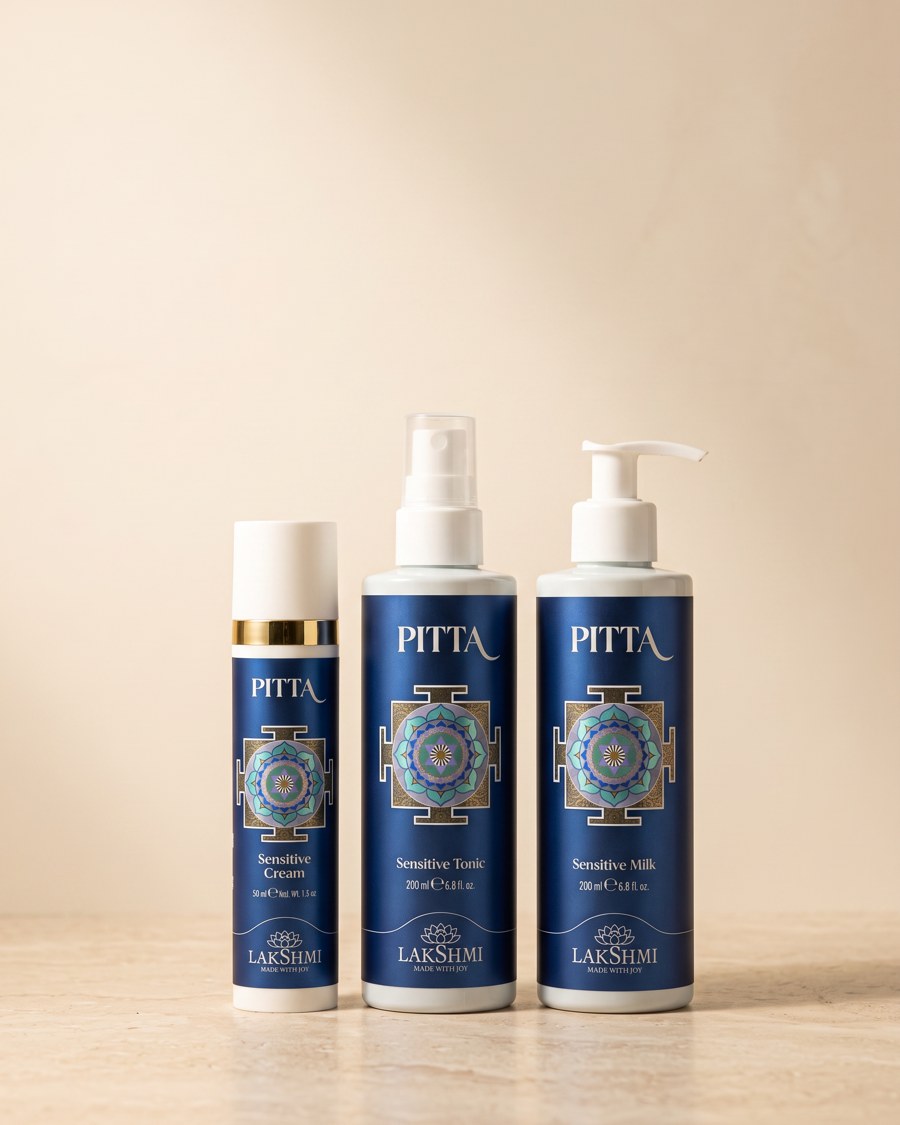
Turmeric is a supporting player in a routine, not its foundation. In Lakshmi's Ayurvedic-inspired approach it suits skin that runs oily and blemish-prone, the territory of the Kapha line, where botanicals are formulated at sensible concentrations to work without the kitchen-counter mess.
Turmeric is a supporting player, not the foundation of a routine. In Lakshmi's Ayurvedic-inspired catalog, it belongs with skin that runs oily and blemish-prone, the territory of the Kapha line, including the Kapha Pure Light Cream and the Kapha Perfection Tonic, formulated at sensible concentrations in bases built to deliver botanicals without the kitchen-counter mess. Used with realistic expectations, turmeric can support the look of a more even, balanced complexion as one considered step among several. We lay out the fuller evidence picture in our piece on what the evidence actually supports.
Used with realistic expectations and a little formulation sense, turmeric can be a quietly useful part of a routine, minus the orange hands. When you are ready, you can discover formulated botanicals that work without the kitchen-counter mess.
When you are ready, explore the KAPHA Radiance Ritual.
Related reading: Why eating plain turmeric does almost nothing · Is it the herb, or the oil it's dissolved in? · Where botanicals shine, and where sunscreen comes first
About the author
Franco Canteri is the co-founder of Lakshmi and the author of Lakshmi Ayurveda. In 1988 he and Linda Canteri traveled to India for one of the first Ayurveda courses of their generation, and in 1989 they founded Lakshmi on the hills of Verona. A yoga and meditation instructor, Franco has guided the brand's Ayurvedic-inspired formulation practice for more than thirty-five years. This article reflects that founding philosophy.
This article is for educational purposes and does not constitute medical advice. For melasma or persistent hyperpigmentation, consult a dermatologist.