Is It the Herb, or the Oil It's Dissolved In? How to Tell What's Actually Working on Your Skin
In skincare, the difference between a carrier oil and an active ingredient is simple: the active is the botanical added to produce a specific effect, and the carrier is the nourishing base it is dissolved in. Which one is actually working? Often the base does more than the label suggests. You bought the product for the saffron, or the rare root, or the botanical with the unpronounceable name on the front of the bottle. And it worked, sort of. Your skin looked softer, a little more luminous. But if you are the kind of person who reads ingredient lists and asks how things actually function, a quieter question may have surfaced underneath the glow: was that the prized herb doing its work, or was it just the nourishing oil the herb was dissolved in?
It is a sophisticated question, and asking it puts you ahead of most marketing. The honest answer is that the base often deserves more credit than the headline ingredient, and learning to tell the two apart will change how you evaluate every botanical product you consider. It is the difference between buying a story and buying a formulation.
What Question Do Thoughtful Readers Eventually Ask?
It is easy to accept a product's results at face value and credit whatever the label told you to credit. But results have two possible sources in any botanical oil, and they are easy to confuse. There is the active you paid attention to, and there is the vehicle it arrived in, which is rarely inert. Once you notice that distinction, you cannot unsee it, and it makes you a far better judge of what is worth your money.
When a botanical oil improves the look of your skin, the result can come from the prized active, from the nourishing base it sits in, or from both. Learning to tell the vehicle from the active is what separates buying a story from buying a formulation.
What Is the Difference Between an Active and a Vehicle?
Two terms do most of the work here. An active (the ingredient included to produce a specific, intended effect) is what the marketing usually celebrates. A carrier or vehicle (the base that dissolves and delivers the active, and often nourishes the skin in its own right) is what the active is suspended in. The crucial thing is that many carriers are not passive. A sesame or almond oil base is genuinely emollient on its own, capable of leaving skin feeling softer and more supple regardless of what is dissolved in it.
In skincare, an active is the ingredient chosen to produce a specific effect, while a carrier or vehicle is the base that dissolves and delivers it. The key point: many carriers, like sesame or almond oil, are emollient on their own and can leave skin feeling softer.
So when a botanical oil makes your skin feel better, that improvement might be coming from the celebrated herb, from the perfectly ordinary nourishing base, or from both. The label points you at one. The skin may be responding to the other.
Why Does the Base Often Deserve the Credit?
Consider the much-loved saffron oils of the Ayurvedic tradition. Much of the immediate softness and glow people attribute to the saffron may in fact come from the sesame oil base it sits in, a capable emollient by itself. This is not a reason for cynicism, nor a reason to dismiss botanicals. It is simply an accurate reading of what is happening on the skin. We explore this exact case in our honest look at kumkumadi oil, where the gap between the herb's reputation and the base's contribution is especially wide.
With traditional saffron oils, much of the softness and glow people credit to the saffron may actually come from the sesame oil base, an emollient in its own right. Noticing this is not cynicism about botanicals. It is an honest reading of what your skin is responding to.
How Do You Tell What's Doing the Work?
A few questions help you separate signal from story. Where does the active sit on the ingredient list, near the top where it is present in real amounts, or near the bottom as a trace? Is there credible evidence for that active at the concentration a product like this could plausibly contain? And could the base alone explain the result you are seeing? If a product's entire promise rests on a rare herb that appears last on the list, the glow you experience is probably the vehicle talking. None of this means the product is bad. It means you should know what you are actually paying for.
What Does Formulation Integrity Actually Mean?
This is where serious formulation distinguishes itself. A thoughtfully built product does not rely on a famous herb dropped into a generic base and left to coast on its reputation. It pairs a meaningful concentration of an active with a vehicle chosen to deliver and complement it, designed around how the ingredients actually behave together. The active and the base become collaborators, each doing real work, rather than one carrying a passenger. That integrity is invisible on the front of the package and obvious once you know to look for it.
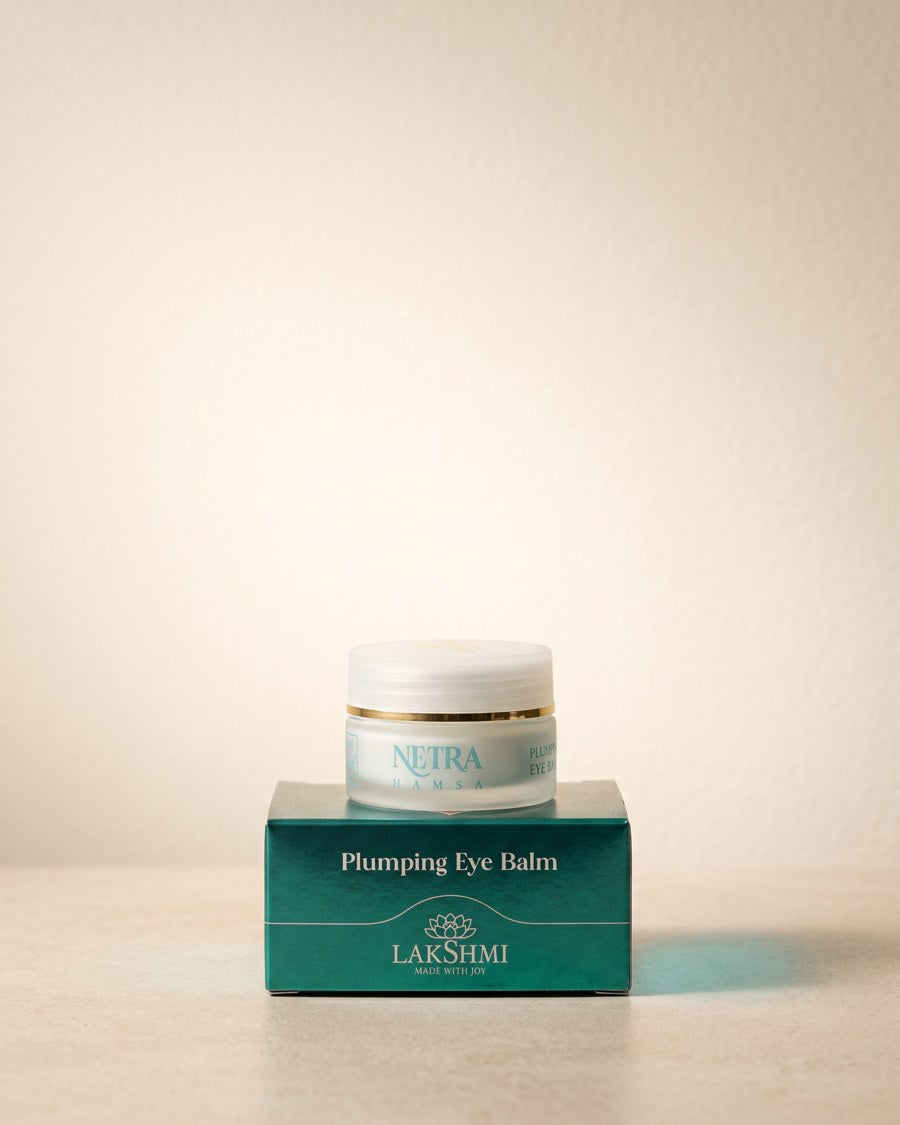
Formulation integrity means pairing a meaningful amount of an active with a base chosen to deliver and complement it, so both do real work. A treatment like Lakshmi's NETRA Midnight Butter is designed as a considered whole rather than a single hero ingredient propped up by marketing.
This is the standard behind how Lakshmi formulates, with Ayurvedic-inspired recipes developed through modern Italian cosmetic science. A treatment like NETRA Midnight Butter is built as a considered whole, where the nourishing base and the botanical actives are designed to work together rather than a single hero ingredient propped up by marketing. The goal is a product where, if you asked what was doing the work, the honest answer would be all of it.
How Do You Read Your Products Like a Formulator?
So the next time a botanical oil impresses you, enjoy the result and then ask the quiet question anyway. What is actually working here, the herb or the oil it is dissolved in? Look at the ingredient order, weigh the evidence for the active, and consider what the base alone could explain. You will buy fewer stories and more formulations, and your routine will be better for it. When you are ready, you can discover formulations where the active and the base are designed to work together.
To read a product like a formulator, check where the active sits on the ingredient list, weigh the evidence behind it, and ask what the base alone could explain. Do that and you will buy fewer stories and more genuine formulations.
When you are ready, explore the VATA Comfort Ritual.
Related reading: Kumkumadi oil, honestly · Why eating plain turmeric does almost nothing · Where botanicals shine, and where sunscreen comes first
About the author
Franco Canteri is the co-founder of Lakshmi and the author of Lakshmi Ayurveda. In 1988 he and Linda Canteri traveled to India for one of the first Ayurveda courses of their generation, and in 1989 they founded Lakshmi on the hills of Verona. A yoga and meditation instructor, Franco has guided the brand's Ayurvedic-inspired formulation practice for more than thirty-five years. This article reflects that founding philosophy.
This article is for educational purposes and does not constitute medical advice.