Your "Pitta" Flush Might Be Rosacea: When Skin Calls for a Dermatologist
How do you tell pitta skin from rosacea? By persistence. A pitta flush rises with heat, stress, or spicy food and fades within hours. Rosacea redness stays: it settles across the cheeks and nose, brings small bumps, stinging, or visible vessels, and only a dermatologist can diagnose it. That distinction is worth sitting with, because the two are so easy to mistake for each other.
You have learned to read your own skin. When your cheeks flush after a glass of wine, a hot afternoon, or a stressful week, you have a word for it now: pitta. The Ayurvedic lens gave you a way to understand the heat you feel rising in your face, and there is real wisdom in that. But there is a moment worth pausing on, the moment when the flush stops behaving like a passing state and starts to feel like a fixture: when the redness no longer fades by morning, when it brings small bumps, or a sting, or fine visible vessels that were not there a year ago. That is the moment the most caring thing a brand can tell you is not which cream to buy, but which door to knock on.
This piece honors the pitta lens and then asks it to share the room with another possibility, one that a dermatologist is far better placed to name than any jar on your shelf.
Why Does Redness Get Read as Too Much Heat?
In Ayurveda, pitta (the principle associated with fire, heat, and transformation) governs much of how we understand warmth in the body and on the skin. A pitta-leaning state is often described through redness, sensitivity, and a tendency to overheat. The lens is intuitive because it tracks something true: heat, inflammation, and stress genuinely do aggravate reactive skin, and many people who identify with a pitta pattern are noticing real triggers.
So the instinct to cool, soothe, and calm is not misguided. It simply has a ceiling. The pitta lens describes a tendency. It was never built to diagnose a medical condition, and when redness crosses into that territory, the lens alone cannot tell you so.
The pitta lens describes a tendency toward heat, redness, and reactivity. It was never built to diagnose a medical condition, so when facial redness stops fading on its own, Ayurvedic self-knowledge is the place to start, not the final word.
What Is Rosacea, Actually?
Rosacea is a common, chronic skin condition that dermatologists diagnose and manage. It tends to present as persistent redness across the central face, the cheeks, nose, chin, and forehead. It can bring visible blood vessels, a tendency to flush easily, and in some forms small red bumps or pustules that are sometimes mistaken for acne. Its triggers will sound familiar to anyone fluent in pitta language: sun, heat, alcohol, spicy food, stress, and temperature swings.
That overlap is exactly why rosacea so often hides inside a pitta self-diagnosis. The triggers rhyme. The redness rhymes. What differs is what is happening underneath, and that is not something you can determine from a quiz or an article.
Rosacea is a common, chronic skin condition marked by persistent redness across the central face, easy flushing, visible blood vessels, and sometimes small bumps or pustules. Only a dermatologist can diagnose rosacea, and its triggers, sun, heat, alcohol, spicy food, and stress, overlap closely with classic pitta aggravators.
Signs It Is Worth a Dermatologist's Eyes
A few patterns are worth taking seriously rather than soothing on your own: redness that persists for weeks rather than passing within hours, flushing that has clearly worsened over months, visible vessels that stay mapped across the cheeks or nose, bumps or pustules riding on top of the redness, a stinging or burning quality, or eyes that feel gritty and irritated alongside the facial redness. If you recognize several of these, the next step is a consultation with a board-certified dermatologist, who can confirm whether it is rosacea and guide treatment. Rosacea is a medical condition, and it responds to medical care in a way no cosmetic can replicate.
Where Do Ayurveda and Dermatology Meet?
Here is the reassuring part, and it is the heart of how Ayurveda and modern dermatology can sit together rather than argue. Both traditions point at the same aggravators. Both say that heat, friction, harsh products, sun, and stress make reactive skin worse. They simply divide the labor. The clinician diagnoses and treats the underlying condition. A considered daily ritual supports the skin's comfort and the appearance of calm around that care.
A gentle, barrier-respecting routine will not cure rosacea, and it is important to say so plainly. What it can do is avoid making reactive skin angrier, and improve how comfortable and settled your skin looks and feels day to day. That is a worthy role. It is simply a supporting one.
A dermatologist diagnoses and treats rosacea; a gentle daily ritual simply supports how sensitive, redness-prone skin looks and feels around that care. The ritual comforts, the clinician treats, and neither replaces the other.
What Does a Cooling Daily Ritual Look Like?
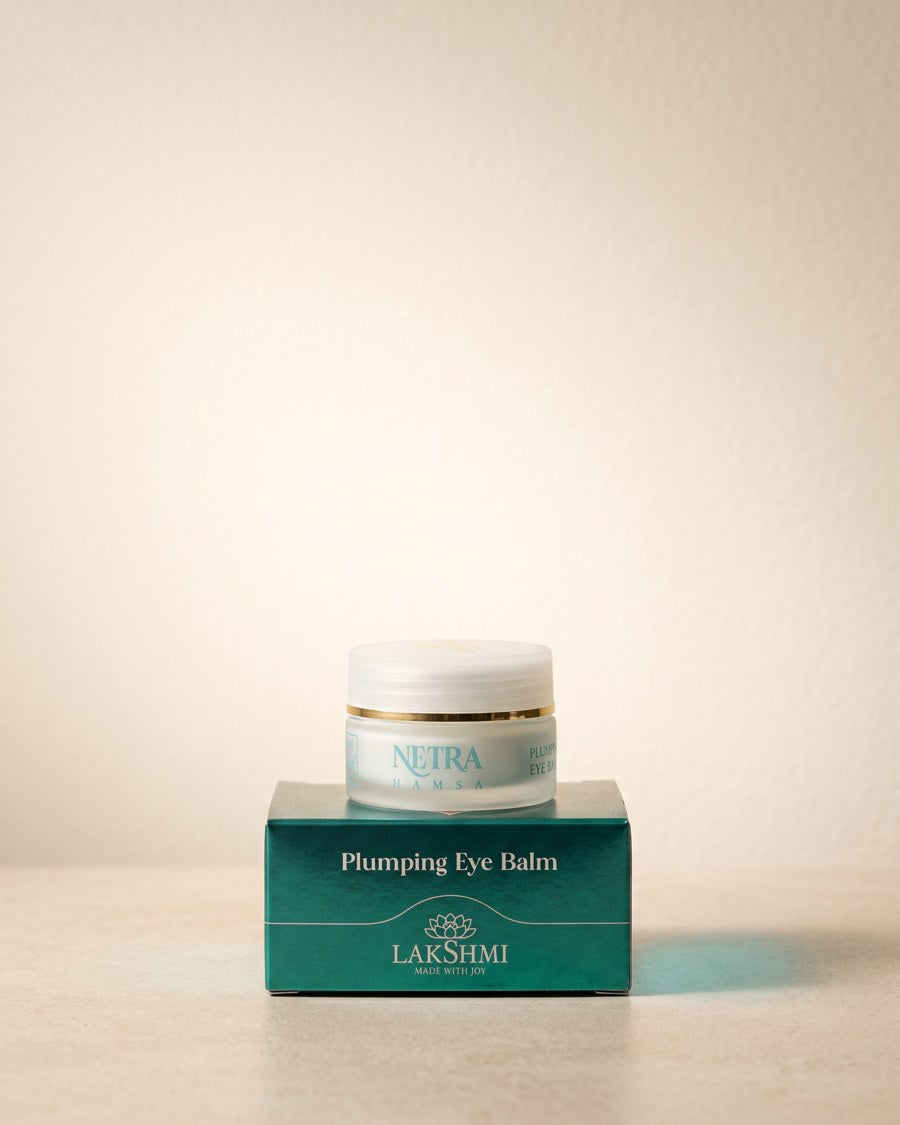
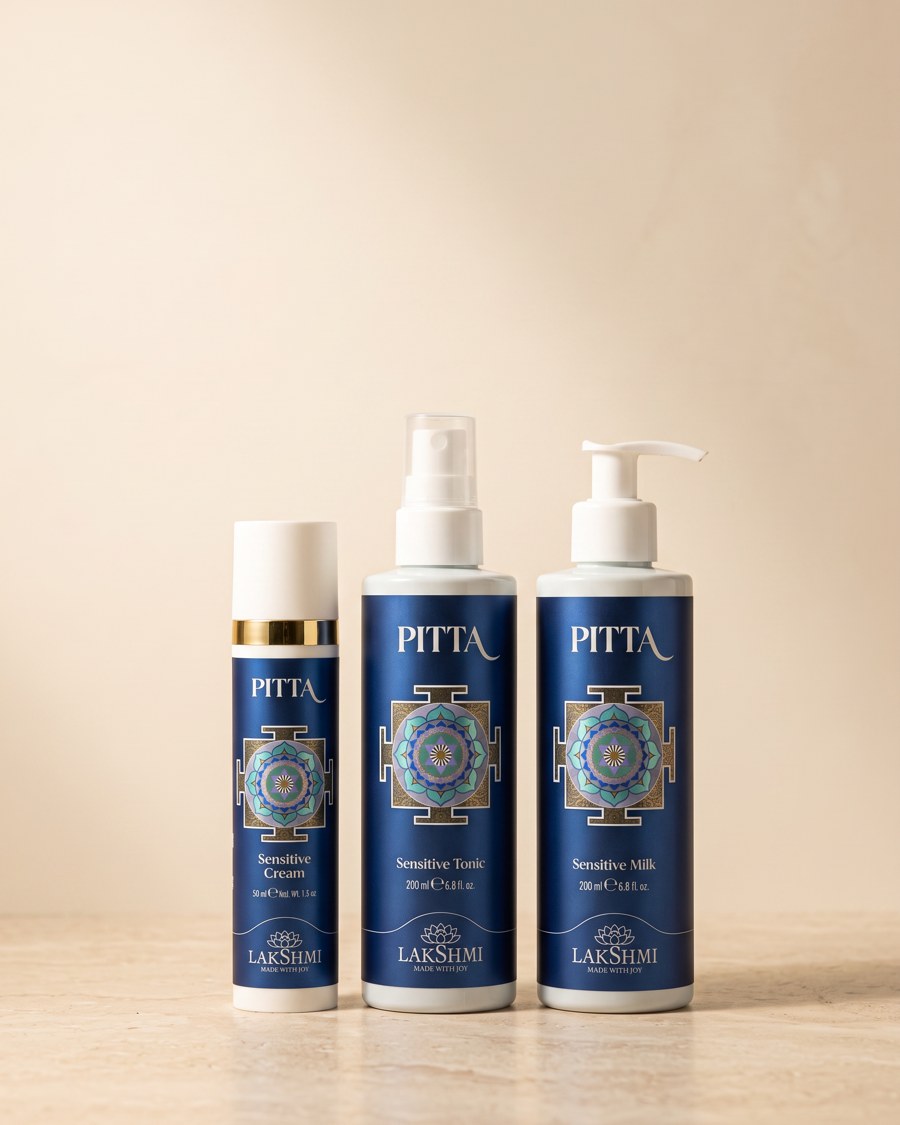
If your skin runs warm and reactive, the kindest routine is also the simplest. Cleanse without stripping, using a mild, low-friction cleanser rather than anything foaming or abrasive. Lakshmi's Pitta Sensitive Milk was formulated for exactly this, a soft cleansing step that respects a compromised barrier rather than challenging it. Follow with a calming, barrier-supportive moisturizer such as the Pitta Sensitive Cream to improve the appearance of evenness and reduce the look of redness. And be mindful of the everyday aggravators, since sun, heat, friction, and harsh products are among the most common things that leave reactive skin looking and feeling worse, with daily sun protection an especially worthwhile habit for skin that flushes.
The point of this ritual is restraint. Fewer actives, gentler textures, less friction. Reactive skin rarely needs more done to it. It usually needs less, done more thoughtfully.
For sensitive, redness-prone skin, a cooling ritual favors restraint: a mild cleansing milk, a calming barrier-supportive cream, fewer actives, less friction, and daily sun protection. Gentle care like this supports the look and feel of calm; it does not treat any medical condition.
When Do You Ritual, and When Do You Refer?
So hold both truths at once. The pitta lens gave you a real and useful way to notice heat in your skin, and a gentle cooling ritual is a genuine comfort to skin that runs warm. And, if your flush has become persistent, if it stings, if it brings bumps or visible vessels, that is the signal to let a dermatologist look. A ritual supports your skin around expert care. It does not replace the diagnosis only a clinician can give.
A cooling ritual and a dermatologist are not rivals. The ritual supports the comfort and look of sensitive, redness-prone skin; the dermatologist diagnoses and treats whatever has stopped behaving like a passing flush.
There is no contradiction in being a devoted student of your constitution and also booking the appointment. The most sophisticated approach to skin is the one that knows the limits of each tool and uses the right one at the right moment. When you are ready, you can explore Lakshmi's ritual for sensitive, reactive skin, and let your dermatologist weigh in on anything that has stopped behaving like a passing flush.
Related reading: Understanding Pitta Skin and breakouts · supporting skin through hormonal change · Ayurvedic herbs and drug interactions: what to ask
About the author
Franco Canteri is the co-founder of Lakshmi and the author of Lakshmi Ayurveda. In 1988 he and Linda Canteri traveled to India for one of the first Ayurveda courses of their generation, and in 1989 they founded Lakshmi on the hills of Verona. A yoga and meditation instructor, Franco has guided the brand's Ayurvedic-inspired formulation practice for more than thirty-five years. This article reflects that founding philosophy.
This article is for educational purposes and does not constitute medical advice. Rosacea is a medical condition; consult a board-certified dermatologist for diagnosis and treatment.