
That Breakout Isn't a "Purge": Why a Rich Facial Oil Can Congest Skin Rather Than Renew It
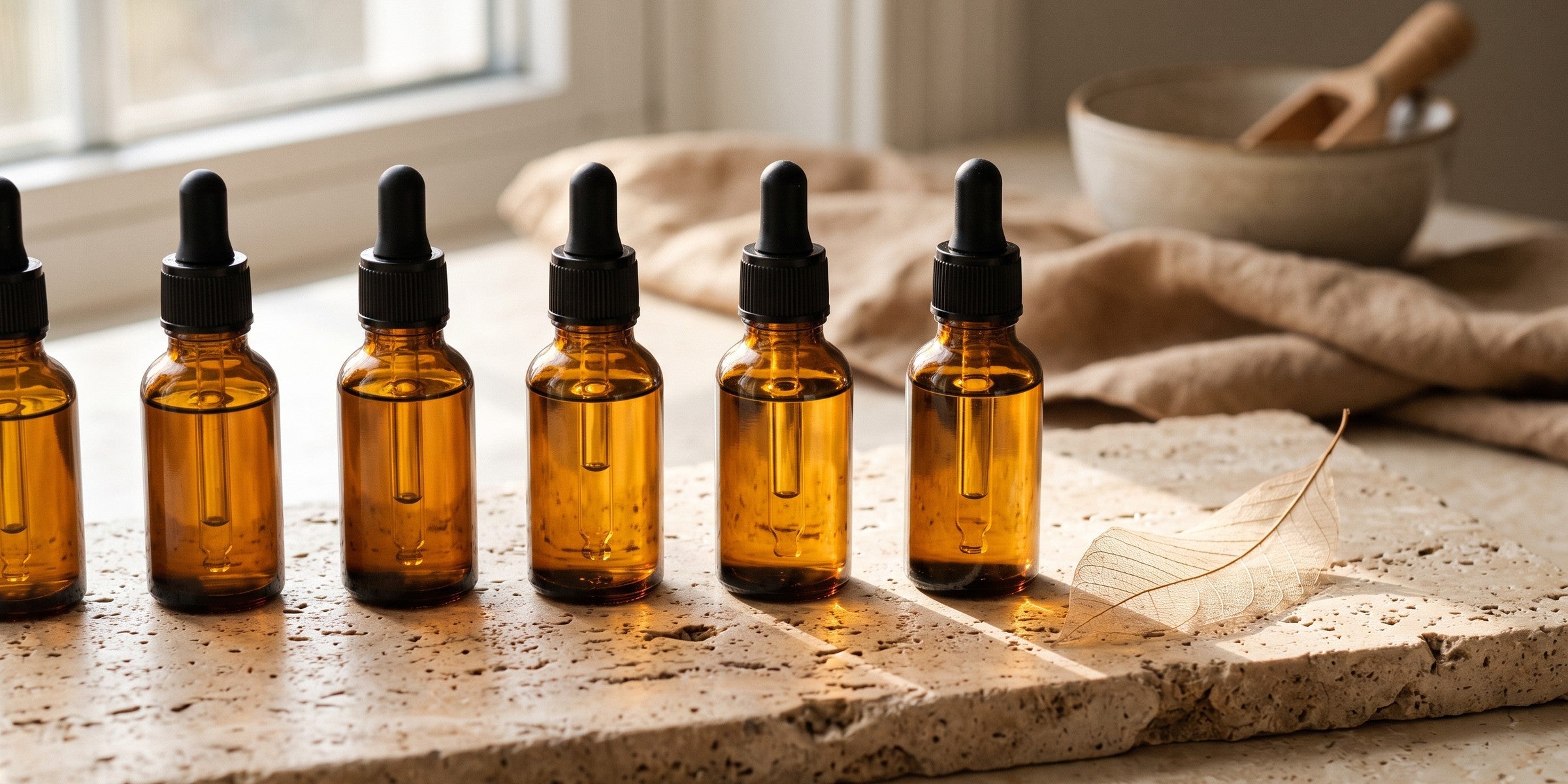
If an Ayurvedic or rich facial oil is breaking you out, it is almost certainly a reaction or congestion, not a purge. A true purge needs an ingredient that speeds up skin-cell turnover, and a plain carrier oil has no such mechanism. So the breakout is feedback that the oil does not suit your skin, not proof that it is working. It is one of the most reassuring stories in skincare, which is exactly why it is so easy to believe. You start a rich new facial oil, your skin breaks out, and someone tells you not to worry, it is just purging. The impurities are being drawn to the surface. Push through, and clearer skin is waiting on the other side. So you keep going, week after week, watching your skin get worse while you wait for the promised turn.
Here is the difficulty with that story: for a plain facial oil, it is almost certainly not true. Purging is real, but it has a narrow and specific cause, and a rich carrier oil does not meet it. Understanding what purging actually is will spare you weeks of breakouts on false hope, and it will help you tell a product that renews your skin from one that simply congests it.
Why Do We Want to Believe the Purge Story?
The purge narrative appeals on an emotional level as much as anything. Nobody wants to believe that a product they chose carefully, and perhaps paid well for, is making their skin worse. Reframing the breakout as progress lets you keep faith in the product and in your decision. But skin does not owe you that comfort, and the most useful thing you can do is look at what is actually happening rather than what you hope is happening.
The purge story is comforting because it lets you keep faith in a product you chose carefully, but comfort is not evidence. When a rich facial oil breaks you out, the most useful move is to look at what your skin is actually doing rather than what you hope it will do.
What Does "Purging" Actually Mean?
In dermatology, purging (a temporary acceleration of the skin's natural exfoliation cycle) has a specific trigger. It happens when an ingredient speeds up cell turnover, bringing the early blockages that were already forming beneath the surface to a head faster than they otherwise would. Crucially, it comes from a particular class of actives, retinoids and certain exfoliating acids among them, the ingredients that accelerate turnover. During a true purge, dermatologists observe that breakouts tend to appear in your usual problem areas, because the active is fast-forwarding congestion that was already on its way.
Purging is a temporary speed-up of the skin's natural exfoliation, and dermatologists tie it to actives like retinoids and certain exfoliating acids that accelerate cell turnover. A plain carrier oil has no such mechanism, so a breakout after a rich oil is a reaction, not a purge.
Why Can't a Plain Oil "Purge" You?
This is the part that matters. A carrier oil, the base of most facial oils including traditional Ayurvedic preparations, does not accelerate cell turnover. It has no mechanism to push existing congestion to the surface faster. So when a rich oil is followed by breakouts, what you are seeing is not a purge. It is a reaction or congestion, your skin responding poorly to a product that does not suit it. The idea that an oil is "drawing out impurities" or detoxing your skin is a myth. Oils do not pull toxins out of the skin, and a breakout from one is information, not progress.
How Can You Tell Congestion From Purging?
A few signals separate the two. Location is one commonly cited clue: true purging tends to surface in your usual breakout zones, while a reaction more often appears in new areas where you rarely break out. Timing matters too. Purging from an active follows a roughly predictable arc tied to your skin's turnover cycle and then eases, whereas congestion from an unsuitable product tends to persist or worsen the longer you use it. The simplest test of all is the trend line. If weeks have passed and your skin is still getting worse, that is not a process to push through. That is your skin telling you to stop.
To tell congestion from purging, watch location and time. A purge tends to surface in your usual breakout zones and eases within weeks, while congestion from an unsuitable oil often appears in new areas and lingers or worsens. If weeks pass and your skin keeps getting worse, that is your signal to stop.
What Does This Mean for Choosing an Oil?
The lesson is not that facial oils are bad. It is that formulation and suitability matter enormously, especially if your skin is oily or prone to fungal acne (a breakout-like condition driven by yeast rather than ordinary acne bacteria, which heavy oils can feed). A heavy, occlusive oil can sit on the skin and trap what is beneath it, while a lighter, thoughtfully formulated treatment supports the appearance of renewed skin without weighing it down. The difference is in how the oil is built and matched to your skin, not in whether oils as a category deserve a place in your routine.
This is the thinking behind how Lakshmi formulates its treatments. For oily or blemish-prone skin, the Kapha Pure Light Cream is built as a lightweight, fast-absorbing treatment that supports the look of balanced, comfortable skin rather than a heavy occlusive layer meant to be endured. The goal of a good formulation is to leave skin looking balanced by morning, not congested by the weekend.
When choosing an oil, formulation and fit matter more than the category. A heavy, occlusive oil can sit on the skin and trap what is beneath it, while a lighter, thoughtfully built treatment supports the look of comfortable, balanced skin without weighing it down.
How Do You Trust Your Skin's Signals?
So give yourself permission to stop waiting for a turn that is not coming. If a rich oil is breaking you out, you are not failing to push through a necessary phase. You are using a product that does not suit your skin, and the breakout is the clearest feedback you could ask for. Choose treatments that are formulated and matched thoughtfully, watch how your skin actually responds over a few weeks rather than how you hope it will, and let the trend line be your guide. When you are ready, you can discover treatments formulated to suit your skin, not to test your patience.
A note worth keeping: persistent or painful breakouts are a medical matter, and a dermatologist can help where no oil can. Blemish-prone skin is manageable, and seeking that care is simply the right tool for the job.
Your skin's signals are the most honest feedback you have. If a rich oil keeps breaking you out, you are not failing to push through a phase; you are using a product that does not suit you. Watch how your skin responds over a few weeks, and let the trend line guide you.
When you are ready, explore the KAPHA Radiance Ritual.
Related reading: Putting ghee on your face: ritual or "movie theater butter"? · Is it the herb, or the oil it's dissolved in? · Can you layer Ayurvedic oils with retinoids and acids?
About the author
Franco Canteri is the co-founder of Lakshmi and the author of Lakshmi Ayurveda. In 1988 he and Linda Canteri traveled to India for one of the first Ayurveda courses of their generation, and in 1989 they founded Lakshmi on the hills of Verona. A yoga and meditation instructor, Franco has guided the brand's Ayurvedic-inspired formulation practice for more than thirty-five years. This article reflects that founding philosophy.
This article is for educational purposes and does not constitute medical advice. For persistent or painful breakouts, consult a dermatologist.