Putting Ghee on Your Face: Ancestral Ritual or "Movie Theater Butter"?
Shata dhauta ghrita, or hundred-times-washed ghee, is a traditional Ayurvedic preparation used on the skin as a cool, pale, balm-like emollient. On dry, depleted skin it can support comfort and the look of nourishment, roughly the way a good occlusive balm does. It suits dry, Vata-leaning skin and poorly suits oily skin. What follows is the honest version: what it is, what it can reasonably do, who it suits, and who should skip it.
Smoothing clarified butter onto your face as skincare lands somewhere between intriguing and absurd. For anyone raised on lightweight serums and oil-free everything, the first reaction is usually a laugh and a question: isn't that just movie theater butter for your cheeks? And yet the practice has a name, a method, and centuries behind it, which is enough to make a curious person pause before dismissing it. The truth sits between the two reactions. It is neither a miracle nor a joke, and the honest version is more interesting than either.
So Why Does Putting Ghee on Your Face Sound Like a Dare?
Part of what makes the idea jarring is the mental image of butter melting greasily on warm skin. But the preparation Ayurveda traditionally uses is not butter from the jar, and that distinction is the whole point. A slow, deliberate process transforms it into something that looks and feels almost nothing like what you started with. Before you decide it is ridiculous, it is worth knowing what that process actually produces.
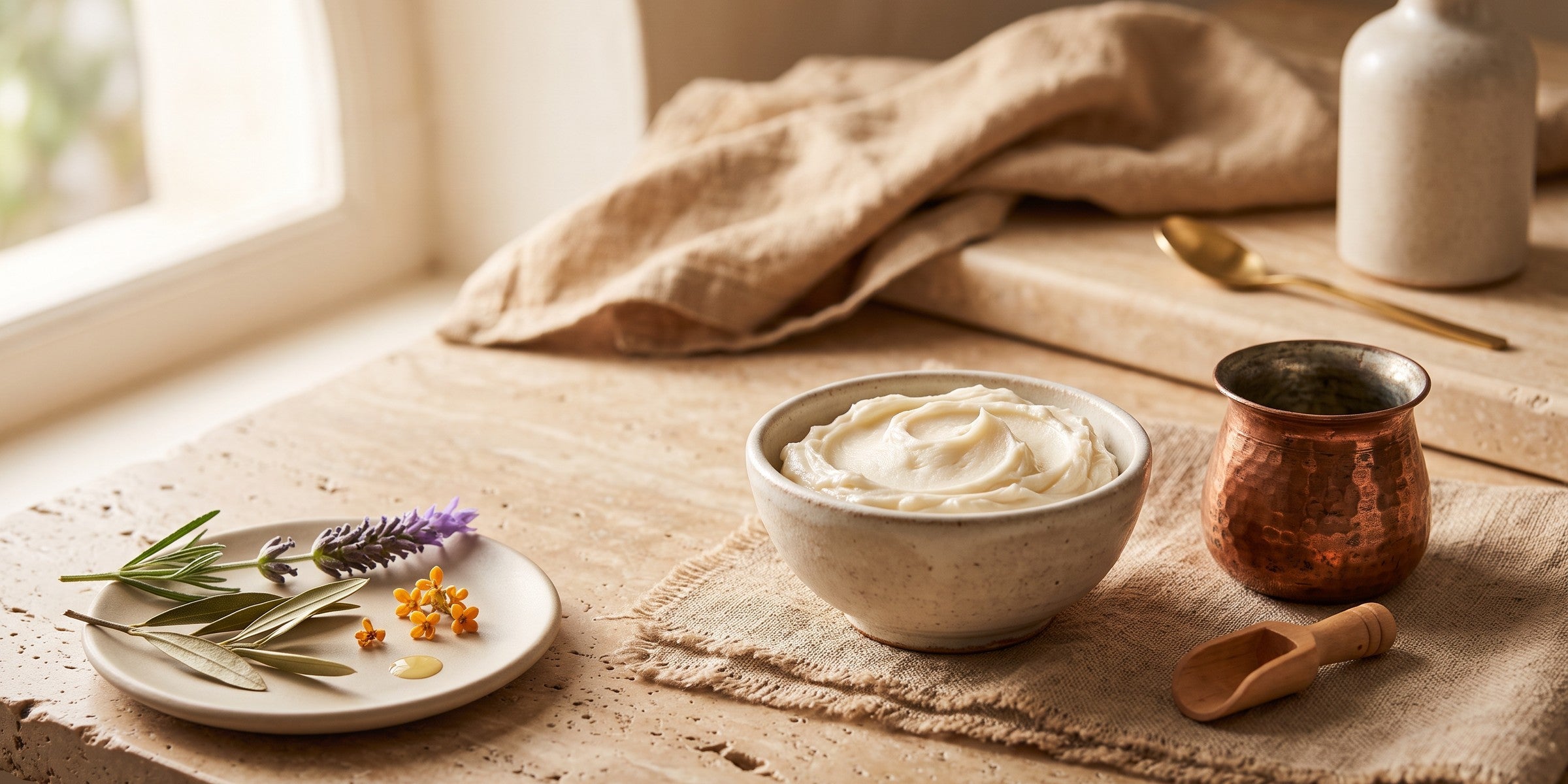
The preparation Ayurveda uses is not butter straight from the jar. Shata dhauta ghrita is clarified butter washed in water again and again until it turns into a cool, pale, whipped balm that feels almost nothing like the greasy image the word butter brings to mind.
What Exactly Is Shata Dhauta Ghrita?
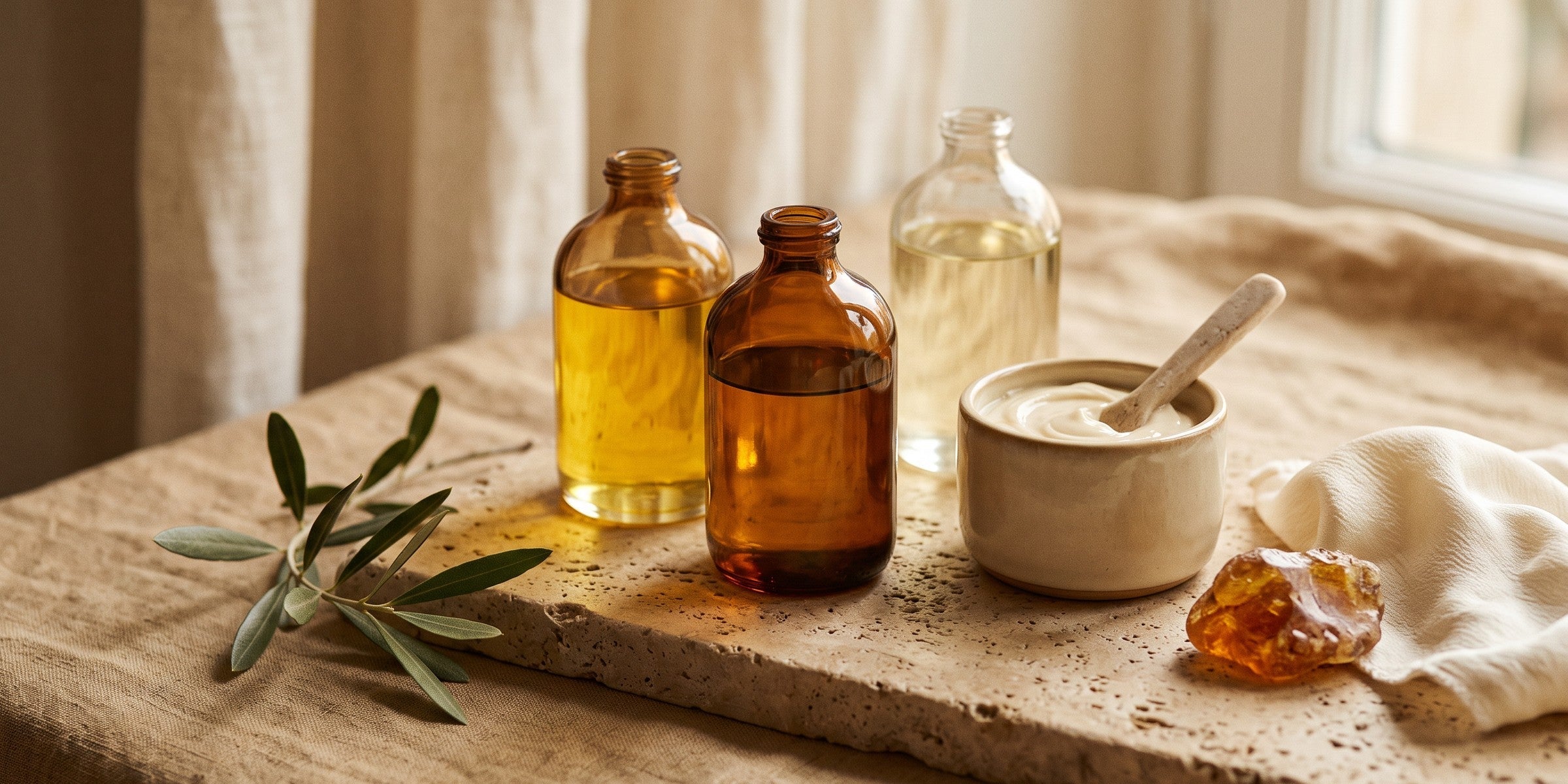
The traditional preparation is called shata dhauta ghrita (literally "hundred-times-washed ghee," clarified butter that is washed over and over in water until it becomes a cool, pale, whipped balm). The repeated washing changes everything about it. The texture turns light and aerated, the greasiness recedes, and what remains is a soft, balm-like emollient that feels closer to a whipped moisturizer than to anything you would put on popcorn.
So the "movie theater butter" image, while understandable, describes the raw material rather than the finished ritual. Shata dhauta ghrita is what happens when patience is applied to a humble ingredient until it becomes something else entirely.
Shata dhauta ghrita means hundred-times-washed ghee: clarified butter rinsed over and over in water until the greasiness recedes and what remains is a soft, aerated, balm-like emollient closer to a whipped moisturizer than to anything you would put on popcorn.
What Can Washed Ghee Actually Do for Your Skin?
Here honesty matters more than enthusiasm. As a rich emollient, washed ghee can support the appearance and comfort of dry, depleted skin, sitting on the surface as an occlusive layer that helps skin look and feel more nourished. That is a real but modest role, roughly the one a good occlusive balm plays. Traditional claims often reach further than the evidence does, so it is fairer to call this a barrier-supportive emollient that may suit dry skin than to promise it transforms the complexion. The instinct behind the ritual, to nourish and protect skin that has lost its softness, is sound. The reasonable expectation is comfort and the look of replenished skin, nothing more.
As a rich emollient, washed ghee can support the comfort and look of dry, depleted skin, sitting on the surface as an occlusive layer, roughly the role a good occlusive balm plays. The honest expectation is comfort and replenished-looking skin, not a fix for anything.
Who Does Washed Ghee Suit, and Who Should Skip It?
This is where it pays to know your own skin. A rich emollient like washed ghee tends to suit dry, Vata-leaning skin that craves nourishment and tolerates occlusion well. It is a poorer choice for oily skin, and a genuine caution for anyone whose skin is prone to a yeast-driven, breakout-like reaction, which rich occlusive layers can encourage. If your skin runs oily or congests easily, a heavy occlusive is often the wrong tool, and there is no tradition worth breaking out for. Match the ritual to the skin you actually have.
How Is a Ritual Like This Meant to Be Used?
If you do try it, the practical guardrails are simple. Use a thin layer rather than a thick smear, since more does not mean better with an occlusive. Reserve it for the evening, when your skin has hours to absorb and rest. And patch test first, both for sensitivity and to gauge how your skin handles the richness over a few nights before committing your whole face. Treated this way, the ritual is low-risk for the skin types it suits and easy to abandon for the ones it does not.
If you try washed ghee, keep it simple: a thin layer rather than a thick smear, reserved for the evening, and a patch test first for sensitivity. Used this way, it stays low-risk for the dry skin it suits and easy to abandon for the skin it does not.
Can Tradition Be Made Dependable for Modern Skin?
The deeper value of a ritual like shata dhauta ghrita is what it reveals about an instinct worth keeping: that depleted skin wants to be nourished and protected, not stripped and corrected. That instinct is ancient and correct. What modern formulation adds is reliability, delivering the same barrier-supportive nourishment in a form that is consistent, suited to the dry, Vata-leaning skin it is made for, and free of the guesswork of a kitchen preparation.
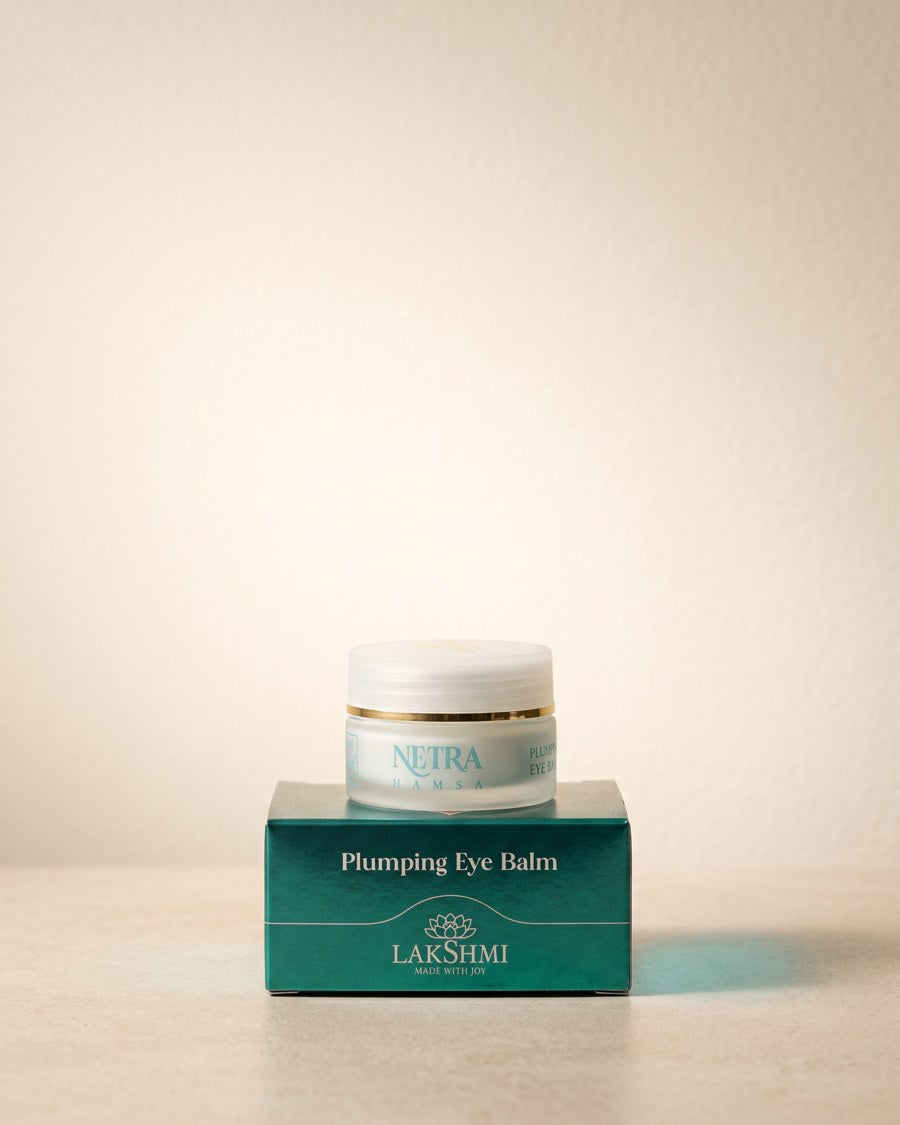
This is the thinking behind Lakshmi's Vata Comfort Ritual, created for the thin, dry, Vata-leaning skin that this kind of nourishment suits best. The Vata Tone & Lift Cream at its center carries the same intention to nourish and replenish depleted skin, formulated from certified botanicals to a consistent standard in our own Tuscan laboratory, La Verde Vita, so the result does not depend on how well you washed your ghee. The ancestral instinct is honored. The execution is simply made dependable. When you are ready, you can explore the Vata Comfort Ritual, built for skin that craves nourishment.
Lakshmi's Vata Comfort Ritual carries the ancestral instinct to nourish depleted skin into a dependable form, made for thin, dry, Vata-leaning skin. Formulated from certified botanicals in our own laboratory, La Verde Vita, it delivers barrier-supportive nourishment consistently, without the guesswork of a kitchen preparation.
Related reading: Purge or breakout? Why a rich oil can congest skin · Layering Ayurvedic oils with retinoids and acids · the Vata Comfort Ritual guide
About the author
Franco Canteri is the co-founder of Lakshmi and the author of Lakshmi Ayurveda. In 1988 he and Linda Canteri traveled to India for one of the first Ayurveda courses of their generation, and in 1989 they founded Lakshmi on the hills of Verona. A yoga and meditation instructor, Franco has guided the brand's Ayurvedic-inspired formulation practice for more than thirty-five years. This article reflects that founding philosophy.
This article is for educational purposes and does not constitute medical advice. For persistent dryness or any skin condition, consult a dermatologist.