Article: When You've Tried Everything: How Ayurvedic Ritual Can Support Skin Through Hormonal Change
When You've Tried Everything: How Ayurvedic Ritual Can Support Skin Through Hormonal Change
Ayurvedic skincare cannot change your hormones, and no honest ritual will claim to. What it can do during hormonal changes is support the appearance and comfort of shifting skin and offer a calmer daily practice, alongside the medical care those changes genuinely require. The rest of this piece is about what that gentle support looks like, and where its honest limit lies.
If you are reading this, you have probably tried more than you can remember. The serums that promised to fix it. The routines you followed faithfully for the recommended twelve weeks. The advice that worked for someone else and not for you. Through all of it, your skin has kept shifting with your hormones, breaking the rules just as you thought you understood them. That effort is exhausting, and the exhaustion is real. Before anything else, it deserves to be acknowledged rather than met with one more confident promise.
So this piece will not tell you a cream is the answer you have been missing. Hormonal change is bigger than any product, and honesty about that is the only place worth starting. What ritual can offer is quieter and still worth having: support for the appearance and comfort of your skin, and a calmer relationship with the daily act of caring for it, alongside the medical care that hormonal matters genuinely require.
What If You've Tried Everything and Nothing Has Worked?
If you have tried everything and your skin still shifts with your hormones, you have not failed. Hormonal change reshapes the conditions your skin lives in, and no routine can override biology through effort alone. Naming that plainly is what lets you stop chasing and start caring for your skin as it actually is.
There is a particular fatigue that comes from doing everything right and still feeling let down by your skin. It is easy to read that as a personal failing, as if you simply have not found the right product or the right discipline. You have not failed. Hormonal change reshapes the conditions your skin lives in, and no routine can override biology through effort alone. Naming that plainly is not discouraging. It is what finally lets you stop chasing and start caring for your skin as it actually is.
Why Does Hormonal Change Show Up on Your Skin?
Hormonal change shows up on skin because skin responds to the body it belongs to. Across the monthly cycle, perimenopause, and menopause, oil production shifts and the barrier can turn more reactive or more dry. This is not a flaw. It is skin reflecting a transition, not betraying you.
Skin responds to the body's internal shifts, and the hormonal transitions across a woman's life, the monthly cycle, perimenopause, and menopause, change how skin behaves. Oil production shifts. The barrier can become more reactive or more dry. The appearance of firmness and texture changes as the hormonal environment changes. None of this is a flaw to be ashamed of. It is the skin doing what it has always done, responding to the body it belongs to. Understanding it this way takes some of the frustration out of the mirror, because the skin is not betraying you. It is reflecting a transition.
How Does Stress Fit Into Hormonal Skin Changes?
Stress is where a calming ritual has the most honest role. Research connects the stress hormone cortisol to changes in the skin, and Ayurveda has long used calming practices to steady the system. Tending to stress can support how your skin looks and feels; it does not correct hormones.
One thread in this story is genuinely well placed for ritual to touch, and it runs through stress. Research connects the stress hormone cortisol to changes in the skin, and the traditions of Ayurveda have long used calming practices and adaptogenic herbs to steady the system. Ashwagandha (an adaptogenic herb, Withania somnifera, used in Ayurveda for stress) has some human evidence associating it with lower cortisol and supported wellbeing. That evidence is encouraging rather than conclusive, and it belongs to the broad territory of stress and skin appearance, not to any claim of correcting hormones. Held at that honest level, it points to something useful: tending to stress can support how your skin looks and how you feel in it.
What Does a Gentle, Calming Ritual Look Like?
A gentle ritual for reactive, shifting skin is unhurried and barrier-respecting: a soft cleanse, a calming cream that supports the appearance of settled skin, and a nourishing overnight step. Few steps, gentle textures, delivered consistently. The quiet minutes it gives your nervous system are part of its value.
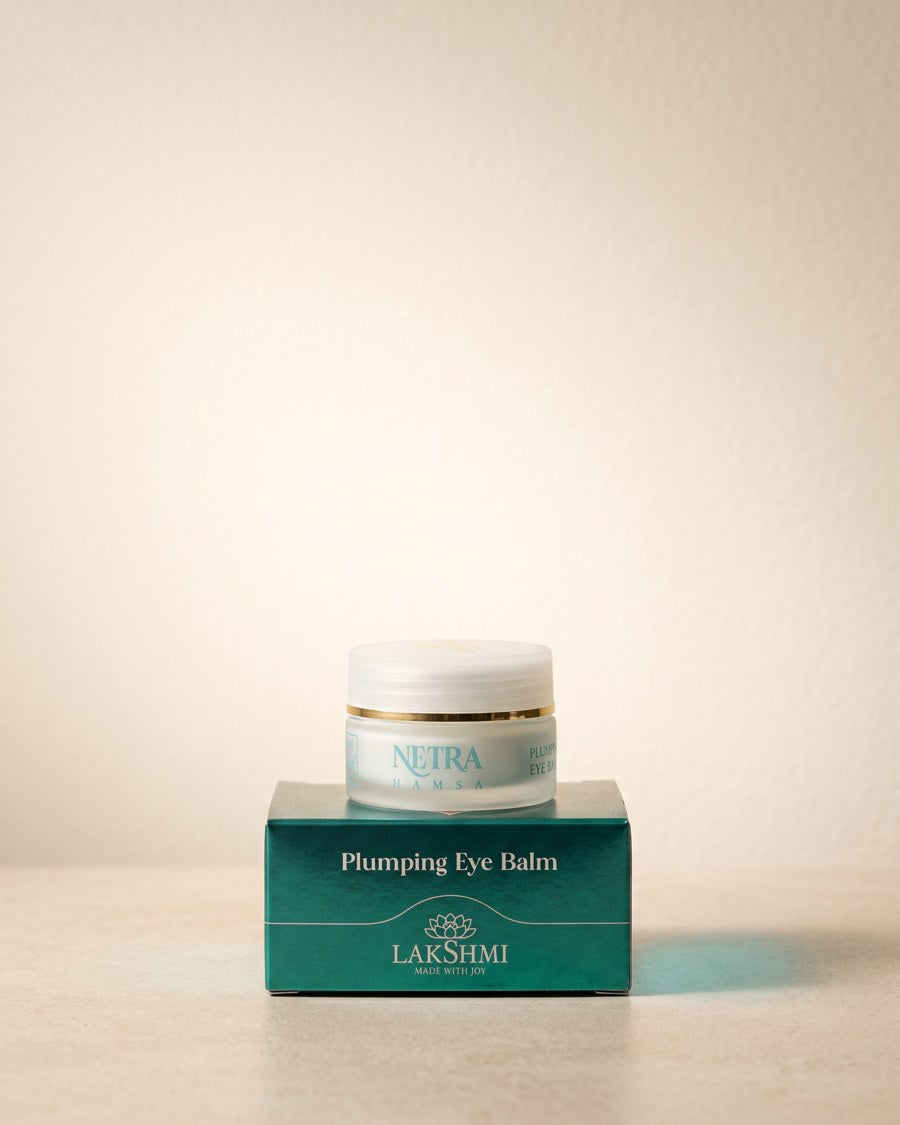
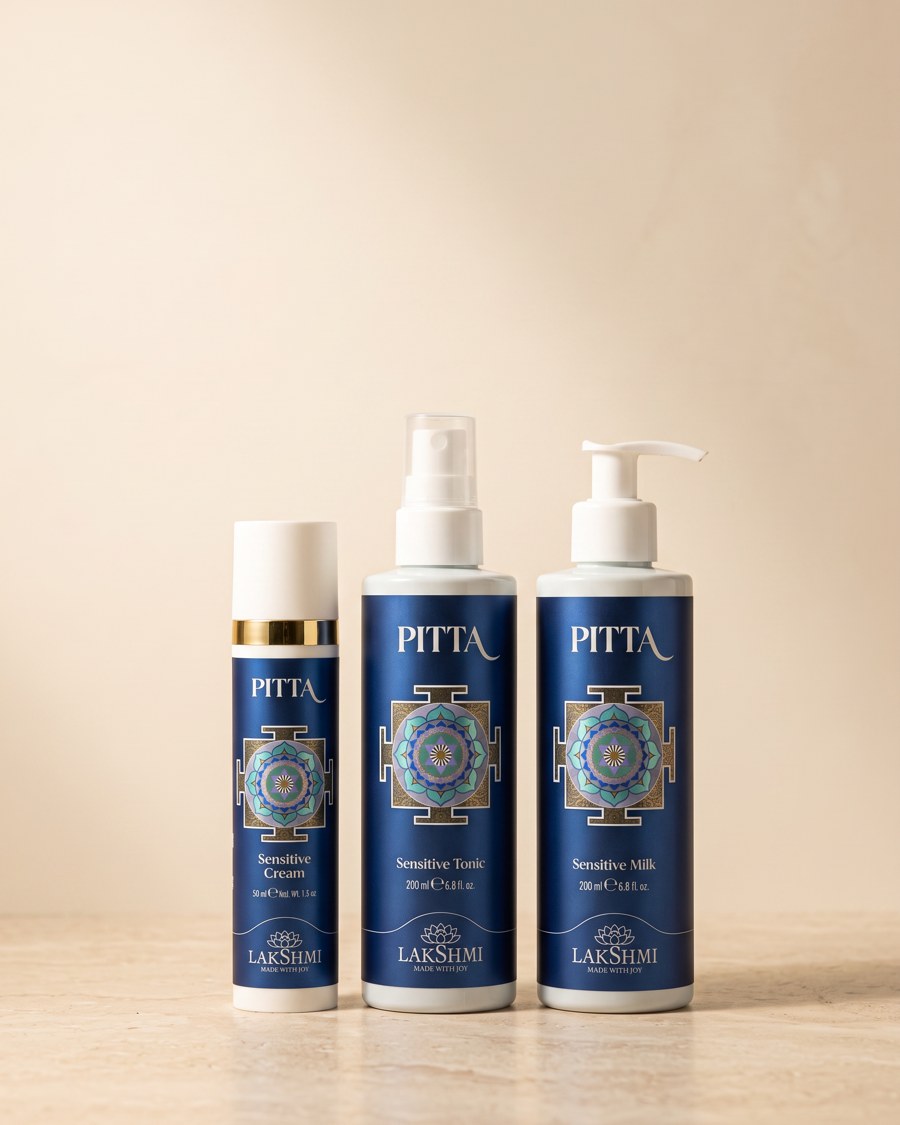
For skin that is reactive and shifting, the kindest routine is unhurried and barrier-respecting rather than intensive. A soft cleanse that does not strip. A calming, comforting step that supports the appearance of settled skin, where Lakshmi's Pitta Sensitive Cream suits reactive skin well. For the delicate eye area, which often shows these shifts first, an overnight step such as the NETRA Midnight Butter supports the look of replenished, comfortable skin by morning. The textures are gentle, the steps are few, and that is the point.
The ritual also offers something beyond what it does to the surface. Slowing down, giving yourself a few unhurried minutes of care at the start and end of the day, is itself a small steadying practice for the nervous system. For skin caught up in the body's stress response, that quiet is not a luxury at the edges of the routine. It is part of the routine's value.
Consistency Over Intensity
Reactive, shifting skin rarely benefits from more actives, stronger formulas, or a longer list of steps. It tends to respond to the opposite, to gentler care delivered consistently over time. The temptation, when nothing seems to work, is to escalate. The wiser move is usually to simplify and to stay steady, letting a calm routine support your skin through the transition rather than fighting it.
What Line Should This Ritual Never Cross?
A skincare ritual must never claim to treat hormones. PCOS, hormonal acne, perimenopause, and menopause are medical matters for your doctor. The ritual supports the appearance and comfort of your skin and offers a calming daily practice; it belongs beside medical care, never in place of it.
This matters enough to say without any softening. PCOS and hormonal acne are medical conditions. Perimenopause and menopause are medical transitions. A skincare ritual supports the appearance and comfort of your skin and offers a calming daily practice. It does not diagnose, treat, balance, or cure any hormonal condition, and it is not a substitute for medical care. If your skin changes are significant, distressing, or accompanied by other symptoms, partner with your doctor or a qualified clinician, who can actually assess and treat what is happening. The ritual belongs beside that care, never in place of it.
Held within that honest boundary, an Ayurvedic ritual has something real to offer the woman who has tried everything. Not a cure, and not another promise, but gentle, consistent support for how your skin looks and feels, and a few calm minutes that are genuinely yours. When you are ready, you can discover a gentle ritual for shifting skin, and keep your clinician as your partner through the rest.
When you are ready, explore the VATA Comfort Ritual.
Related reading: Pitta heat or lasting redness? · Ayurvedic herbs and drug interactions: what to ask · the evening ritual guide
About the author
Franco Canteri is the co-founder of Lakshmi and the author of Lakshmi Ayurveda. In 1988 he and Linda Canteri traveled to India for one of the first Ayurveda courses of their generation, and in 1989 they founded Lakshmi on the hills of Verona. A yoga and meditation instructor, Franco has guided the brand's Ayurvedic-inspired formulation practice for more than thirty-five years. This article reflects that founding philosophy.
This article is for educational purposes and does not constitute medical advice. PCOS, hormonal acne, perimenopause, and menopause are medical matters; please consult your physician or a qualified clinician.