Ancient Tradition, Modern Proof: How to Tell Real Ayurvedic Skincare From "Ayurvedic Washing"
You can tell authentic Ayurvedic skincare by four signs: the brand names where its botanicals are grown, a recognized organic certification stands behind them, the whole formula reflects the tradition rather than a single trending herb, and a real lineage of practice sits behind the label. Hold those four in mind and walk down any beauty aisle, because the word is everywhere now. Ayurvedic this, Ayurvedic that, ancient wisdom printed in elegant type across products that did not exist two years ago. If you have felt a flicker of suspicion at all of it, trust that instinct. A tradition that took shape over thousands of years cannot be bottled overnight, and the gap between the brands that honor it and the ones that borrow its vocabulary is wider than the labels suggest.
The good news is that you do not need to be an expert to tell the difference. A handful of questions separate genuine Ayurvedic formulation from what might fairly be called "Ayurvedic washing," the practice of dressing a conventional product in the language of an ancient tradition. Once you know what to look for, the shelf becomes much easier to read, and your trust becomes much harder to win cheaply.
What Does "Ayurvedic Washing" Actually Mean?
The pattern is easy to spot once you have seen it. A single recognizable herb, turmeric, perhaps, or ashwagandha, gets featured on the front of the package and woven through the marketing. The word Ayurvedic appears in a graceful font. Behind that one hero ingredient sits a formula that is otherwise conventional, with no particular lineage, no provenance, and no logic connecting the herb to how the product was actually made. The tradition has been worn as a costume rather than practiced as a method.
"Ayurvedic washing" is the practice of dressing a conventional cosmetic in the language of an ancient tradition: one recognizable herb on the front of the package, a mostly generic formula behind it, and no real lineage connecting the two.
This is what "Ayurvedic washing" means, and naming it is not a knock against any single company. It is a description of a widespread practice, and the point is to give you the tools to see it for yourself rather than to point fingers.
What Does Authentic Ayurvedic Skincare Actually Look Like?
Authentic Ayurvedic skincare reveals itself in the things that are harder to fake. The formulation reflects a whole-system way of thinking rather than a single trending herb dropped into a generic base. The sourcing is named and traceable, because a brand that knows where its botanicals were grown can tell you. Recognized organic certification stands behind the ingredients rather than vague natural-sounding language. And underneath all of it runs a genuine lineage of practice, a real relationship to the tradition that predates the current Ayurvedic moment in beauty.
Authentic Ayurvedic skincare shows its work: the botanicals' origins are named and traceable, a recognized organic certification stands behind the ingredients, the full formula reflects the tradition as a whole, and a genuine history of practice sits behind the brand.
None of this opposes modern standards. The most credible Ayurvedic brands bridge the tradition and contemporary formulation rather than treating them as rivals, honoring the lineage while meeting the testing and quality expectations a discerning buyer rightly holds. Authenticity and rigor are not in tension. They are the same commitment seen from two sides.
A Short Checklist for the Shelf
When you are weighing a product, four questions do most of the work. Can the brand tell you where its key botanicals come from? Is there a recognized organic certification rather than just natural-sounding language? Does the full ingredient list reflect a considered formulation, or a single herb riding on an otherwise generic base? And is there a real depth of practice behind the brand, or only a recent arrival to a trending word? For a fuller version of this framework, our guide on how to vet any Ayurvedic product for purity goes deeper into each.
What Does More Than Three Decades of Practice Look Like?
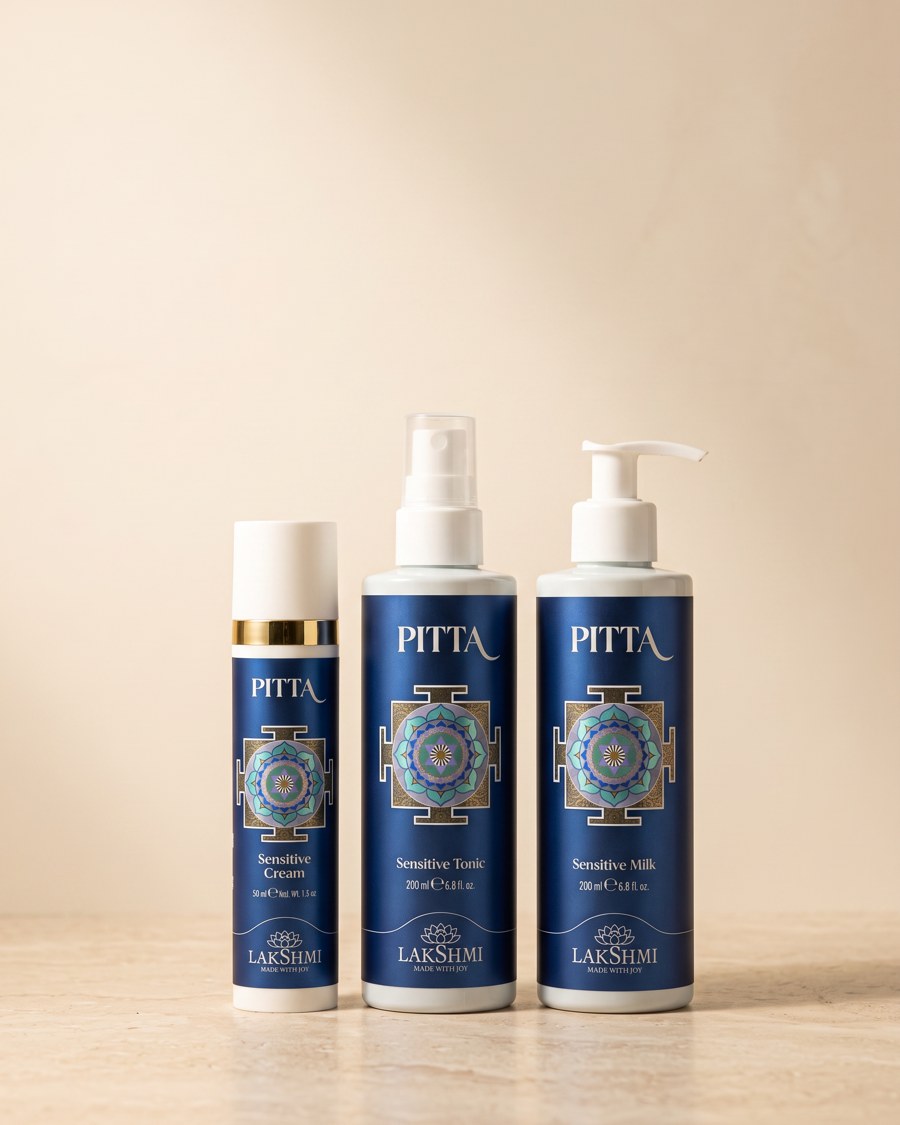
It helps to see the authentic version in the concrete, and Lakshmi illustrates it well precisely because the apparatus is visible. Lakshmi was founded in 1989 in the hills of Verona by Franco and Linda Canteri, and it draws on the Ayurveda course in India Franco and Linda attended in 1988, among the first generation to study the tradition as it was brought to the West. The formulations are Lakshmi's own, Ayurvedic-inspired and developed through modern Italian cosmetic science, and they are produced with the group's own Tuscan laboratory, La Verde Vita, part of Lakshmi Holding since 2004. The products are certified, SKU by SKU, to the AIAB Bio Eco Cosmesi standard, an Italian standard for natural and organic cosmetics, and the brand maintains its own retreat in Kerala, the Ananda Lakshmi Ayurvedic Retreat, which keeps the practice connected to its source rather than to a marketing department.
Lakshmi was founded in 1989 in the hills of Verona by Franco and Linda Canteri. Its Ayurvedic-inspired formulations are developed through modern Italian cosmetic science, certified SKU by SKU to the AIAB Bio Eco Cosmesi standard, and anchored by the brand's own Ananda Lakshmi Ayurvedic Retreat in Kerala, India.
The reason to mention all of this is not to assert authenticity but to demonstrate it. A lineage you can trace, a place you can name, a certification you can verify, and decades of practice behind the formulas are the kind of evidence that "Ayurvedic washing" cannot produce, because it never had them to begin with.
How Do You Read the Label With New Eyes?
So the next time the word catches your eye in elegant type, you will know what to ask. Where do the botanicals come from. What certification stands behind them. Whether the formula reflects a tradition or merely references one. Whether there is real practice behind the brand or only a recent arrival to a popular word. Those questions cost nothing and protect a great deal, and they put the power where it belongs, with you rather than with the marketing.
Four questions reveal whether an Ayurvedic skincare product is authentic: where the botanicals come from, what certification stands behind them, whether the whole formula reflects the tradition, and whether real practice stands behind the brand.
A tradition this old deserves to be honored properly, and the products that borrow its name should be held to its standard. When you are ready, you can discover the practice behind Lakshmi and weigh it against the very test you have just set.
When you are ready, explore the VATA Comfort Ritual.
Related reading: How to vet any Ayurvedic product for purity · Heavy metals: the risk is in pills, not the oil on your face · the Lakshmi heritage story
About the author
Franco Canteri is the co-founder of Lakshmi and the author of Lakshmi Ayurveda. In 1988 he and Linda Canteri traveled to India for one of the first Ayurveda courses of their generation, and in 1989 they founded Lakshmi on the hills of Verona. A yoga and meditation instructor, Franco has guided the brand's Ayurvedic-inspired formulation practice for more than thirty-five years. This article reflects that founding philosophy.
This article is for educational purposes and does not constitute medical advice.